The strongest bolt material is a common question when I speak with industrial buyers, yet the question can hide important risks. A bolt that looks strong on a data sheet may lose suitability under heat, corrosion, cyclic loading, or difficult installation conditions. The practical solution is to match the material to the real service environment.
There is no single strongest bolt material for every application. The best bolt material depends on the required tensile and yield strength, operating temperature, corrosive medium, fatigue exposure, preload requirements, thread design, and approved specification. High-strength alloy steel, precipitation-hardening stainless steel, nickel alloys, titanium alloys, and duplex stainless steels may each be suitable in different conditions1, subject to engineering review and project approval.
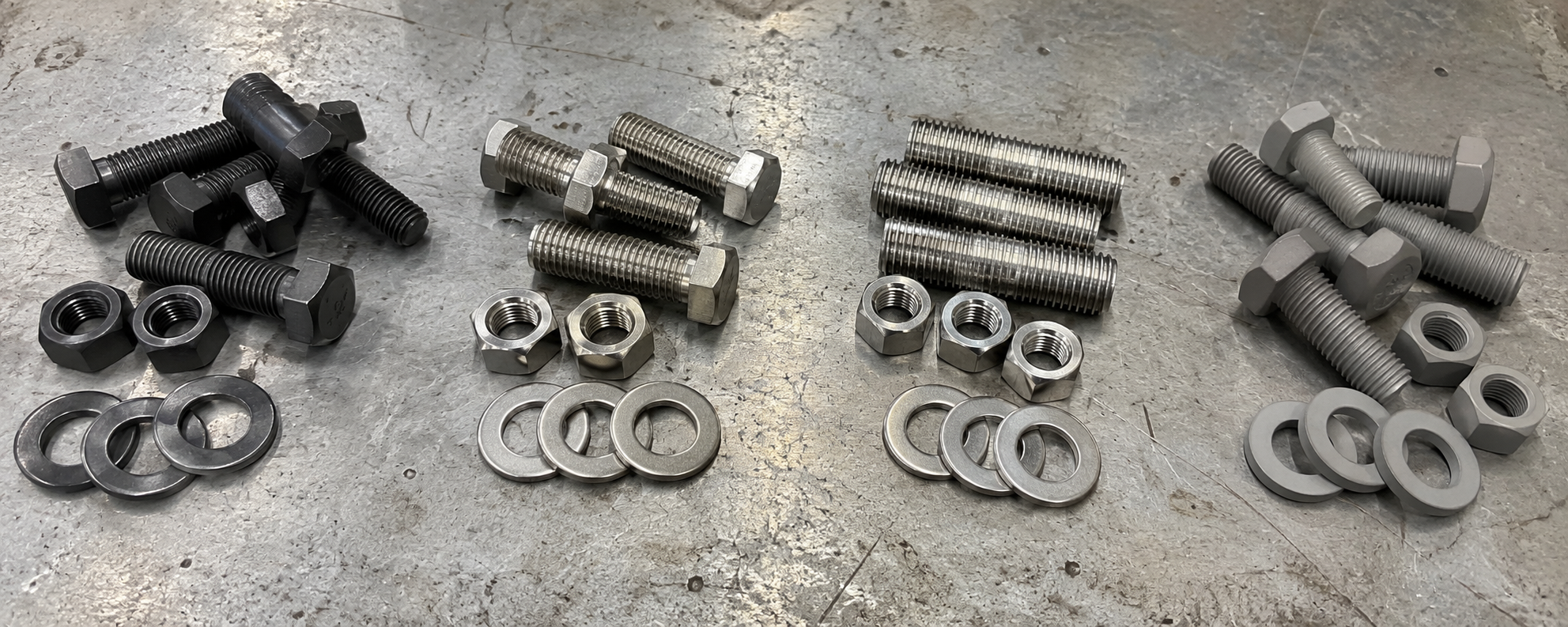
When buyers ask me which material is strongest, I usually start by asking where the bolt will operate rather than naming a grade immediately. That discussion often reveals the real selection criteria: heat, seawater, chemicals, vibration, installation method, documentation, or an existing customer drawing.
Is Tensile Strength the Only Measure of the Strongest Bolt Material?
A buyer may focus on tensile strength because it is easy to compare on a quotation or material certificate. However, a bolt can face far more than a simple pull test. Corrosion, thermal cycling, preload loss, thread damage, and fatigue may create problems long before a theoretical maximum load is reached.
Tensile strength is only one factor in determining the strongest bolt material for an application.2 Buyers should also evaluate yield strength, ductility, fatigue behavior, corrosion resistance, temperature capability, thread engagement, preload, and installation conditions. A material with lower room-temperature tensile strength may provide more reliable service in a corrosive or high-temperature assembly.
Strength Is Not the Same as Connection Reliability
I find that “strongest” can mean different things to different people. One buyer may mean the material with the highest tensile strength. Another may need a bolt that maintains clamp load during repeated temperature changes. A maintenance team may simply need a fastener that can be removed after years in a corrosive environment.
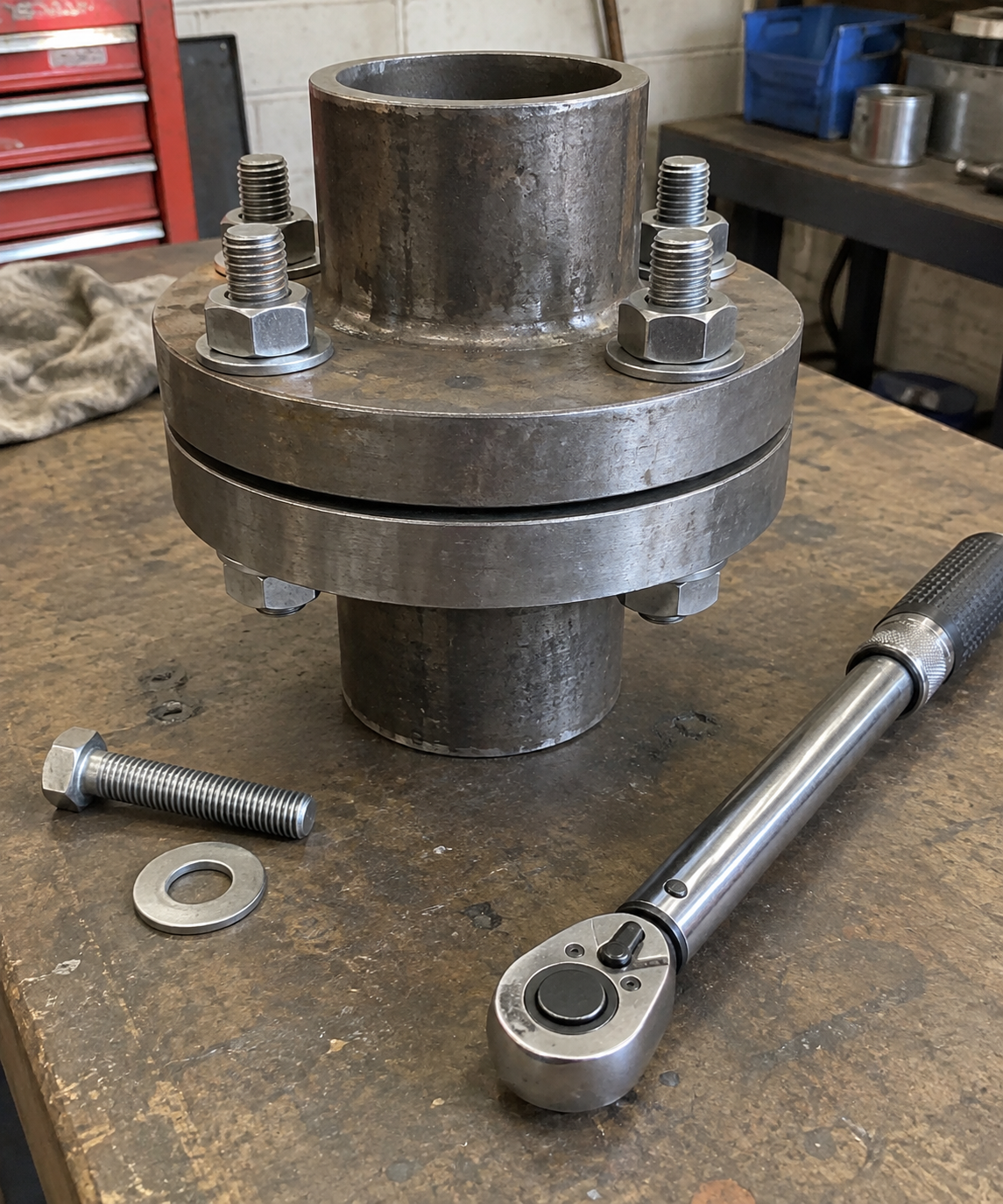
A bolted joint works as a system. The bolt, nut, washer, flange material, tightening method, lubrication, thread condition, and service environment all influence the outcome.3 A material selection cannot be separated completely from this system.
For procurement evaluation, I recommend that buyers distinguish between these questions:
- How much static load must the bolt carry?
- Will the assembly experience vibration or repeated load cycles?
- Will the bolt see elevated temperature, low temperature, or thermal cycling?
- Will chemicals, saltwater, humidity, or process media contact the fastener?
- Does the joint require a specific preload or torque procedure?
- Does the installation create a risk of galling, seizure, or thread damage?
- Is a specific material grade already required by the drawing or customer specification?
Why Yield Strength and Preload Matter
Tensile strength describes the maximum stress a material may withstand before fracture under a defined test condition. Yet many bolted joints are designed around controlled tightening and preload. The bolt must stretch within an acceptable range to maintain clamping force without permanent deformation.
A high ultimate tensile strength does not automatically mean a bolt is the best choice for preload control. Yield strength, elongation, heat-treatment condition, dimensional tolerances, thread quality, and the tightening method can all affect joint performance.
For example, buyers should not assume that two bolts with similar quoted strength values will behave identically because:
- They may have different material chemistry.
- They may be supplied in different heat-treatment conditions.
- They may follow different product standards.
- They may have different thread forms or tolerances.
- They may require different torque or lubrication practices.
- They may have different inspection and traceability requirements.
I always encourage customers to treat a material name as the start of the technical review, not the end of it.
Corrosion Can Reduce Effective Strength
Corrosion is another reason why a simple strength ranking is misleading.4 A strong material may be unsuitable if it degrades rapidly in the actual medium. General corrosion, crevice corrosion, pitting, galvanic interaction, and stress corrosion cracking are separate concerns that require application-specific evaluation.
An offshore assembly, for example, may need more than high tensile capability. The buyer may also need corrosion resistance in chloride-containing conditions, compatibility with adjacent metals, and project-required documentation. In that situation, the strongest bolt material on paper may not be the material that offers the most dependable service life.
Which Bolt Materials Are Often Considered for High-Strength Industrial Applications?
Industrial buyers often compare several alloy families when evaluating the strongest bolt material. Each family has different advantages, limitations, manufacturing considerations, and approval requirements. I do not recommend treating this list as a universal ranking because the intended environment controls the final decision.
High-strength industrial bolts may be made from alloy steel, precipitation-hardening stainless steel, nickel alloys, duplex or super duplex stainless steel, titanium alloys, or specialized austenitic stainless steels. Each material family may be suitable for particular strength, corrosion, temperature, or weight requirements, but the final grade and condition must match the applicable drawing, standard, and approval process.
High-Strength Alloy Steel
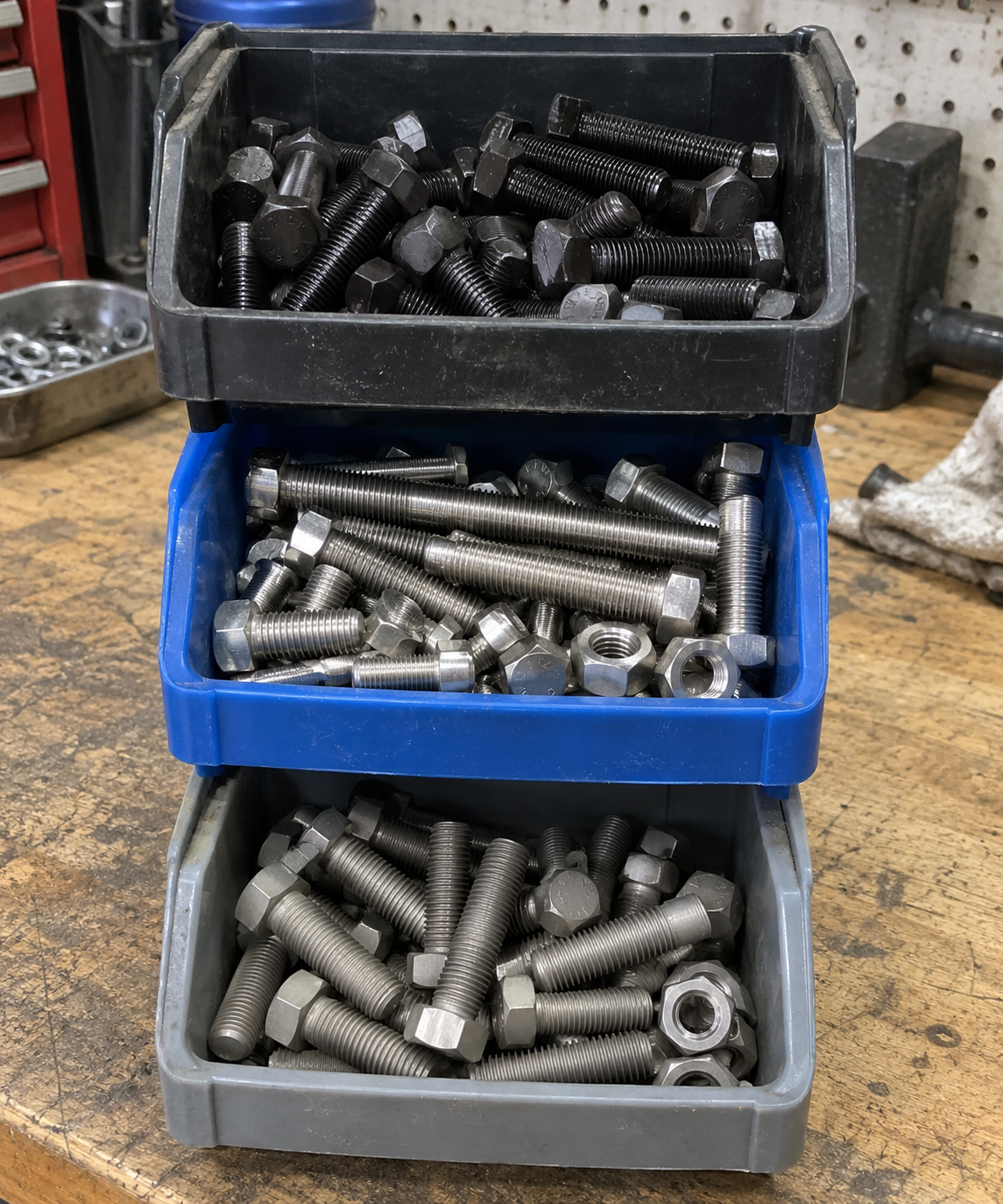
Alloy steel is widely used where high mechanical strength is required and the environment is controlled through coatings, painting, sealing, or other corrosion-management measures. It can be relevant for machinery, structural equipment, and industrial assemblies where the specification calls for a defined strength class or standard.
However, alloy steel is not automatically the best option for wet, chloride-rich, acidic, or high-temperature applications. The buyer should verify the coating system, corrosion allowance, heat-treatment condition, hydrogen embrittlement risk where relevant, and project standard.
Precipitation-Hardening Stainless Steel
Precipitation-hardening stainless steels, such as 17-4PH / Type 630 / UNS S17400, are often considered when buyers need a balance of strength and stainless corrosion resistance. These materials may be relevant for industrial equipment, pumps, valves, shafts, and fastening applications where approved specifications allow their use.
The final suitability depends on the required condition, corrosion environment, and design criteria. A buyer should verify the applicable standard, heat-treatment condition, mechanical-property requirements, and any environmental limitations with qualified technical personnel.
Nickel Alloys
Nickel alloy fasteners are often evaluated for severe corrosion resistance, elevated-temperature service, or both.5 Product requests may involve materials from families such as Inconel, Incoloy, Monel, or Hastelloy. Examples include Alloy 600, 601, 625, 718, X-750, Alloy 825, Alloy 925, Monel 400, Monel K-500, and Hastelloy C-276.
These materials are not interchangeable simply because they are all described as nickel alloys. Their chemistry, strengthening mechanisms, temperature behavior, corrosion resistance, availability, and standard coverage differ. A buyer should confirm the precise grade rather than accepting a general “nickel alloy equivalent.”
Duplex and Super Duplex Stainless Steel
Duplex and super duplex stainless steels may be considered for chloride-containing environments and marine-related equipment6, depending on the detailed application. Commonly requested designations include 2205, UNS S31803, UNS S32205, 2507, UNS S32750, and UNS S32760.
These materials can be relevant where buyers need a combination of mechanical properties and corrosion resistance. Still, the exact media, temperature, fabrication route, and project requirements need review. A material selected for one seawater-related component may not automatically be suitable for every offshore or marine fastening application.
Titanium and Titanium Alloys
Titanium and titanium alloys may be considered where a favorable strength-to-weight ratio and corrosion resistance are important.7 Buyers may specify commercial pure titanium, such as ASTM Grade 2, or titanium alloys, such as Grade 5, depending on their technical requirement.
Titanium fasteners can involve specific issues related to galling, mating materials, thread lubrication, installation procedure, and cost. I recommend that buyers evaluate the full bolted assembly rather than selecting titanium only because it is lightweight or associated with high performance.
| Material family | Typical procurement reason | Common selection concern |
|---|---|---|
| High-strength alloy steel | High mechanical strength and established standard options | Corrosion protection and environmental compatibility |
| PH stainless steel | Strength with stainless corrosion resistance | Required heat-treatment condition and service medium |
| Nickel alloys | Elevated temperature and/or severe corrosion requirements | Exact alloy grade, cost, lead time, approval |
| Duplex stainless steel | Chloride-related and marine-related service considerations | Temperature, media, and specification limits |
| Super duplex stainless steel | Higher corrosion resistance requirements in selected environments | Project approval and fabrication control |
| Titanium alloys | Strength-to-weight and corrosion resistance needs | Galling, mating components, installation method |
How Do Temperature and Corrosion Change the Strongest Bolt Material Choice?
A bolt material that performs well at room temperature may not retain the same characteristics at elevated temperature. Likewise, a material that appears corrosion resistant in ordinary atmospheric exposure may not be suitable in a specific acid, chloride solution, marine atmosphere, or process stream.
Temperature and corrosion can change which option is the strongest bolt material in service.8 Buyers should evaluate the actual operating temperature, maximum excursion, thermal cycling, process medium, moisture exposure, chloride concentration, oxygen level, and contact with dissimilar metals. Material suitability requires verification against reliable technical documentation and project requirements.
High-Temperature Service Requires More Than Room-Temperature Data
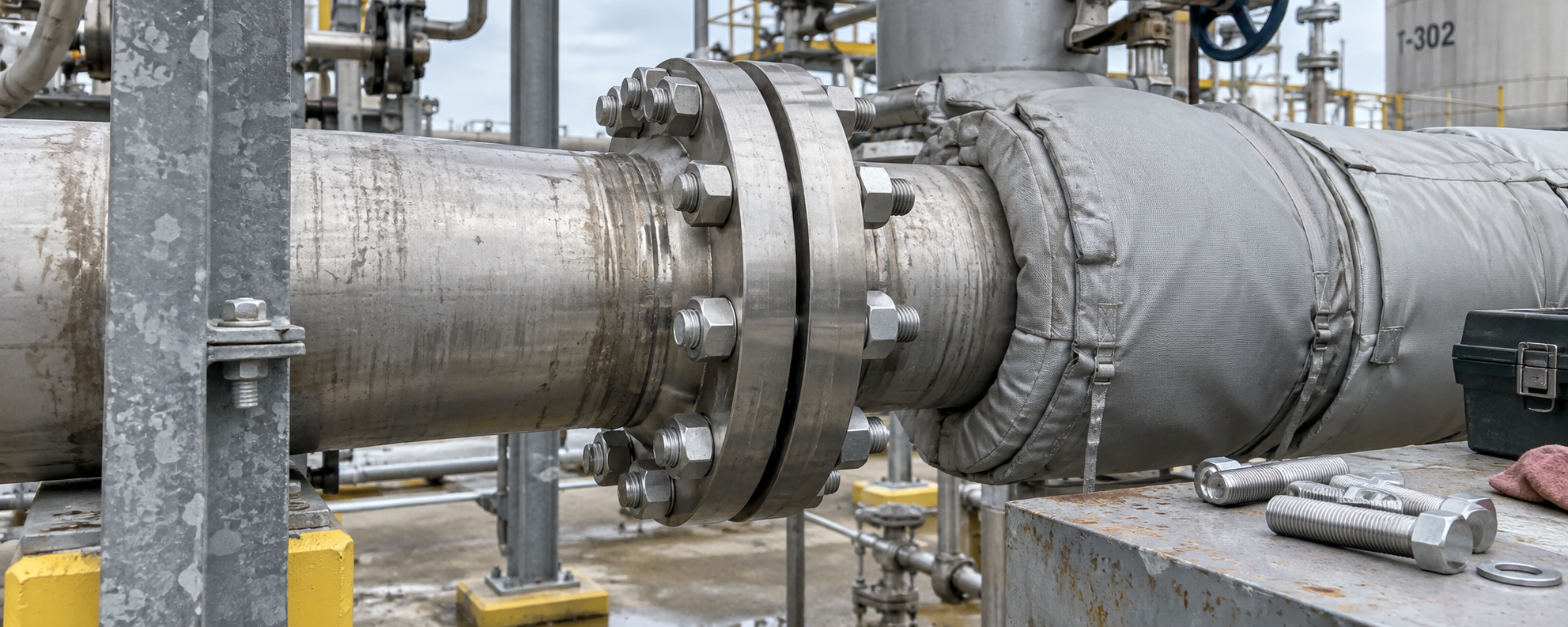
I often see inquiries that include a material grade but no operating temperature. That missing detail can be significant. Elevated temperature may affect strength retention, oxidation behavior, creep resistance, relaxation, and the bolt’s ability to maintain preload over time.
For high-temperature equipment, buyers should clarify:
- Normal operating temperature
- Maximum design temperature
- Upset or excursion temperature
- Duration of high-temperature exposure
- Frequency of heating and cooling cycles
- Process atmosphere, such as oxidizing, reducing, carburizing, or sulfur-containing conditions
- Required material standard and heat-treatment condition
Nickel alloys and heat-resistant stainless steel families are often considered for elevated-temperature equipment. However, I would not describe any one grade as the strongest bolt material without reviewing the actual temperature range and service atmosphere. Alloy 718, Alloy X-750, Alloy 601, 304H, 321, 347, and 347H may arise in industrial inquiries, but each request requires grade-specific technical confirmation.
Corrosive Media Must Be Defined Clearly
“Corrosive environment” is too broad for a reliable material selection. Buyers should identify the actual exposure. Salt spray, seawater immersion, chloride-bearing process fluid, sulfur compounds, caustic solutions, acids, condensate, and humid outdoor exposure can create different material-selection questions.
A useful procurement checklist includes:
| Exposure question | Why it affects bolt selection |
|---|---|
| Is the fastener immersed, splashed, or only exposed to vapor? | Exposure mode may change corrosion risk |
| What chemicals are present? | Different alloys resist different media |
| Are chlorides present? | Chlorides may influence pitting, crevice corrosion, or cracking concerns |
| What is the service temperature? | Corrosion behavior may change with temperature |
| Is stagnant liquid possible under washers or threads? | Crevices can create local corrosion conditions |
| What material is the mating flange or component? | Dissimilar-metal contact may require review |
| Can the bolt be inspected or replaced easily? | Accessibility affects maintenance strategy |
Installation Conditions Also Matter
The material discussion should include installation. Stainless steel, nickel alloy, and titanium threaded fasteners may require attention to galling risk, lubrication, thread fit, surface condition, and tightening practice. I recommend that buyers confirm the approved installation procedure rather than applying torque values from unrelated bolt grades.
A technically suitable bolt can still create assembly issues if the nut material, coating, lubricant, or thread tolerance is not specified correctly. For this reason, a supplier quotation should clearly identify the bolt, nut, washer, material condition, thread standard, and any requested inspection documents.
What Questions Should Buyers Ask Before Selecting the Strongest Bolt Material?
Selecting the strongest bolt material starts with collecting the right technical and commercial information. A vague request for “high-strength bolts” may result in a quotation, but it may not support a confident supplier comparison or final approval. The more complete the requirement, the easier it is to evaluate realistic options.
Before choosing the strongest bolt material, buyers should define the service environment, load type, temperature, corrosion exposure, dimensions, thread, mating components, installation method, required standard, inspection documents, and approval process.9 The selected material must be confirmed against the drawing and project specification rather than chosen from a general strength ranking.
Start With the Engineering Requirement
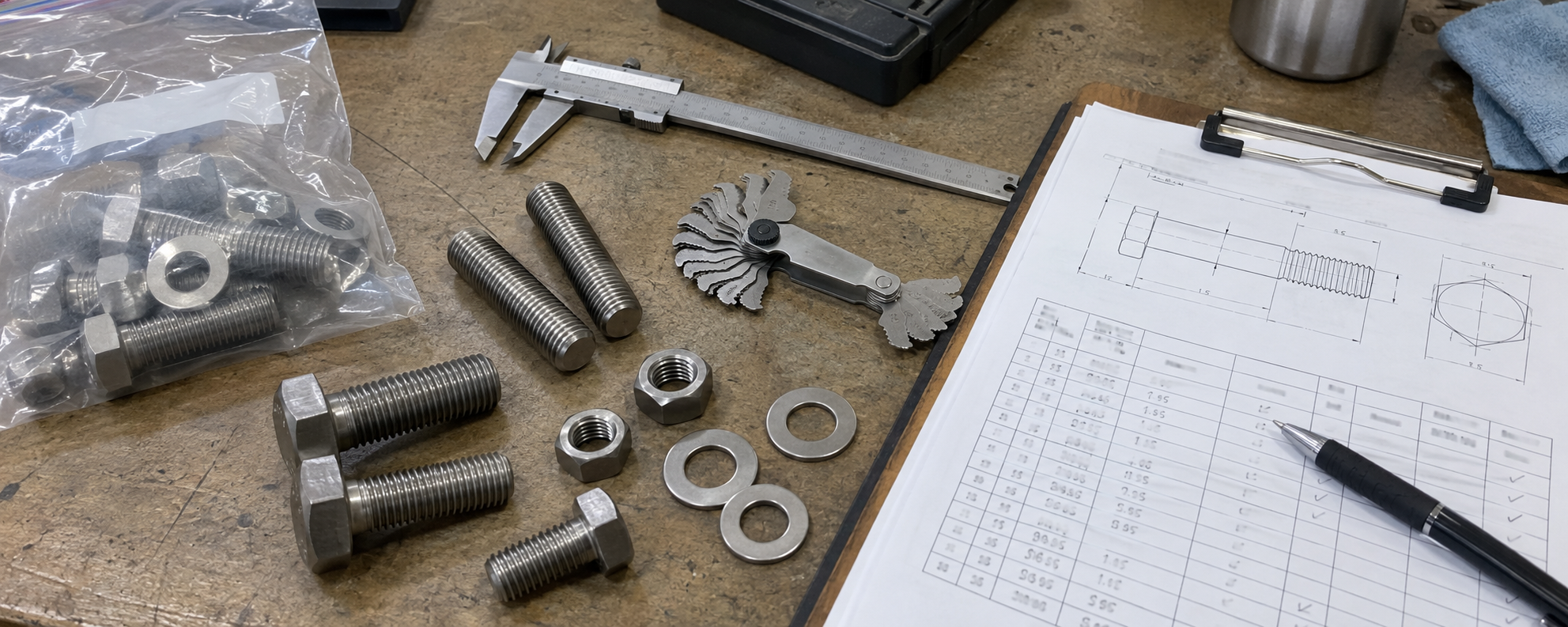
I suggest that purchasers gather the following information before requesting quotations for custom bolts, stud bolts, threaded rods, nuts, or washers:
- Product type: Hex bolt, heavy hex bolt, socket head cap screw, stud bolt, threaded rod, nut, washer, or custom-machined part.
- Material designation: Exact grade, UNS number, ASTM designation, EN material number, or customer-approved material description.
- Drawing and revision: The current approved drawing should identify dimensions, tolerances, thread form, and special requirements.
- Mechanical requirements: Required strength, hardness, heat-treatment condition, or other specified properties.
- Operating environment: Temperature, media, pressure context, vibration, outdoor exposure, immersion, and maintenance conditions.
- Quantity and delivery need: Quantity affects manufacturing route, raw-material procurement, inspection planning, and realistic lead time.
- Quality requirements: Material test reports, traceability, dimensional inspection, thread inspection, PMI, hardness testing, or other project-requested documentation.
- Approval conditions: End-user requirements, approved vendor lists, source restrictions, or required material origin.
Avoid Unapproved Material Substitution
A comparable material is not necessarily an acceptable replacement. Similar alloy names, similar chemistry descriptions, or comparable room-temperature strength values do not prove equivalence under a particular standard or project specification.
For example, a buyer may ask whether one nickel alloy can replace another because both are described as corrosion resistant. The answer depends on the drawing, service medium, temperature, standard, and customer approval. The same principle applies to stainless steel grades, titanium grades, and heat-treated conditions.
I recommend that every quotation clearly state:
- The quoted material grade
- The applicable product or material standard, where specified
- The supplied condition or heat treatment, if applicable
- The requested dimensions and thread
- Any agreed inspection scope
- Any exclusions, assumptions, or deviations
This creates a better basis for supplier comparison. It also reduces the risk that purchasing, engineering, and quality teams are reviewing different assumptions.
Evaluate the Supplier as Well as the Material
The strongest bolt material is only useful when the supplied product matches the agreed requirement. Buyers should evaluate a supplier’s ability to manufacture, inspect, document, pack, and deliver the specific order.
For specialty-alloy fasteners, I believe a practical supplier review should cover:
- Experience with the requested product type and alloy family
- Ability to review drawings and confirm manufacturability
- Raw-material traceability process
- Inspection capability or access to qualified third-party testing
- Thread and dimensional control approach
- Heat-treatment coordination where required
- Documentation scope and format
- Communication of technical deviations before production
- MOQ, lead time, packaging, and export arrangements
At CHENGGE, we focus on specialty alloy fasteners and custom machined components for industrial B2B requirements. We can review customer drawings, material requests, dimensions, and documentation needs before confirming whether an order is within our available manufacturing scope. However, final application suitability and approval should remain with the customer’s qualified engineering and project teams.
Frequently Asked Questions
What is the strongest bolt material in terms of tensile strength?
Some specialty alloys and heat-treated materials can provide very high tensile strength, but I would not identify one universal winner. The required condition, product form, standard, temperature, corrosion exposure, and bolt design all affect the comparison. Buyers should verify grade-specific data through applicable technical documentation.
Is titanium the strongest bolt material?
Titanium is not automatically the strongest bolt material in every situation. Titanium alloys may offer an attractive strength-to-weight ratio and corrosion resistance, but they can involve different cost, galling, installation, and mating-material considerations. The application conditions and approved specification should determine whether titanium is appropriate.
Are stainless steel bolts stronger than alloy steel bolts?
Some stainless steel fasteners prioritize corrosion resistance, while many alloy steel bolts prioritize high mechanical strength. Certain precipitation-hardening stainless steels can combine strength with corrosion resistance. I recommend comparing the exact grade, heat-treatment condition, standard, and service environment instead of comparing broad material categories.
What bolt material is suitable for offshore or marine equipment?
Duplex stainless steel, super duplex stainless steel, nickel alloys, titanium, and other materials may be considered for marine-related or offshore-related service. However, seawater exposure, chloride concentration, temperature, crevice conditions, galvanic contact, and project standards must be evaluated before selecting a material.
Can I substitute one nickel alloy bolt material for another?
A nickel alloy substitute should not be assumed acceptable without written technical and customer approval. Nickel alloy grades have different chemistry, mechanical properties, corrosion behavior, temperature capability, and standard coverage. The drawing, service conditions, material specification, and end-user requirements should control the decision.
Conclusion
The strongest bolt material is not a single grade that works everywhere. A reliable selection considers strength, operating temperature, corrosion exposure, fatigue, preload, thread design, installation conditions, and required documentation. High-strength alloy steel, PH stainless steel, nickel alloys, duplex grades, and titanium may each have a place in industrial fastening applications. If you need specialty alloy bolts, stud bolts, threaded rods, nuts, washers, or custom-machined components, contact CHENGGE with your drawing, material requirement, quantity, and inspection needs for a practical quotation review.
"A Guide to the Selection of High-Strength Anchor Bolt Materials", https://library.ctr.utexas.edu/digitized/texasarchive/phase1/29-1-ctr.pdf. Industry standards such as ASTM F3125 and ISO 898 classify bolt materials into property classes based on tensile strength, yield strength, and elongation, with alloy steels, stainless steels, nickel alloys, and titanium alloys each assigned to specific service conditions. Evidence role: general_support; source type: research. Supports: Industry handbooks and standards (e.g., ASTM F3125, ISO 898) classify bolt materials by strength, corrosion resistance, and temperature limits.. Scope note: The suitability of a specific grade within each family depends on the exact alloy, heat treatment, and environment; the list is not exhaustive. ↩
"Factors which affect fatigue strength of fasteners", https://www.osti.gov/biblio/10173808. Engineering design references, such as Shigley's Mechanical Engineering Design, state that fastener selection must consider yield strength, fatigue resistance, corrosion behavior, and temperature capability in addition to tensile strength. Evidence role: general_support; source type: research. Supports: Engineering design guides emphasize that fastener selection requires evaluation of multiple mechanical and environmental properties.. Scope note: The relative importance of each factor varies by application; no single ranking applies universally. ↩
"Guideline for Bolted Joint Design and Analysis: Version 1.0", https://www.osti.gov/servlets/purl/929124. Standard mechanical design references, such as the Machinery's Handbook, explain that the reliability of a bolted joint depends on the interaction of bolt, nut, washer, lubrication, tightening torque, and service conditions. Evidence role: general_support; source type: research. Supports: Mechanical engineering textbooks describe bolted joints as systems where clamp load depends on bolt, nut, washer, lubrication, and tightening method.. Scope note: The specific influence of each component varies with joint geometry and loading; the statement is a general design principle. ↩
"Influence of Corrosion on Fatigue of the Fastening Bolts - PMC", https://pmc.ncbi.nlm.nih.gov/articles/PMC8003002/. Corrosion engineering references, such as the NACE International standards, document that localized corrosion can significantly reduce the effective cross-section and load capacity of fasteners, making tensile strength alone an unreliable selection criterion. Evidence role: general_support; source type: research. Supports: Corrosion can reduce the load-bearing capacity of fasteners through mechanisms like pitting, crevice corrosion, and stress corrosion cracking.. Scope note: The extent of strength reduction depends on the specific corrosive environment and material; not all corrosion mechanisms affect strength equally. ↩
"The Influence of Alloying Elements on the Hot Corrosion ...", https://pmc.ncbi.nlm.nih.gov/articles/PMC12073046/. Standards such as ASTM B637 and AMS 5663 cover nickel alloy fasteners (e.g., Alloy 718) for service up to 1300°F and in corrosive media, confirming their use in severe conditions. Evidence role: general_support; source type: research. Supports: Nickel alloys are specified in standards for fasteners in corrosive and high-temperature environments.. Scope note: Each nickel alloy grade has specific corrosion and temperature limits; not all nickel alloys are suitable for all severe environments. ↩
"Seawater Corrosion Resistance of Duplex Stainless Steel and ...", https://pmc.ncbi.nlm.nih.gov/articles/PMC10707168/. NACE MR0175/ISO 15156 and ASTM A1082 include duplex and super duplex stainless steels for fasteners in chloride-containing and marine environments, where they offer resistance to pitting and stress corrosion cracking. Evidence role: general_support; source type: research. Supports: Duplex and super duplex stainless steels are specified for fasteners in chloride-rich and marine environments due to their high pitting resistance.. Scope note: Suitability depends on chloride concentration, temperature, and oxygen level; not all duplex grades are equivalent. ↩
"Titanium alloys", https://en.wikipedia.org/wiki/Titanium_alloys. ASTM B348 and AMS 4928 cover titanium alloys (e.g., Grade 5 Ti-6Al-4V) for fasteners in aerospace and marine applications, where their high strength-to-weight ratio and corrosion resistance are advantageous. Evidence role: general_support; source type: research. Supports: Titanium alloys are specified in standards for fasteners requiring high strength-to-weight ratio and corrosion resistance.. Scope note: Titanium fasteners are prone to galling and require special lubrication and installation procedures. ↩
"Influence of Corrosion on Fatigue of the Fastening Bolts - PMC", https://pmc.ncbi.nlm.nih.gov/articles/PMC8003002/. Materials science references, such as the ASM Handbook, document that elevated temperature reduces tensile and yield strength of most alloys, and corrosion can reduce effective cross-sectional area, thereby lowering the serviceable strength of a fastener. Evidence role: general_support; source type: research. Supports: Elevated temperature reduces strength and corrosion can reduce load-bearing cross-section, altering the effective strength of bolt materials.. Scope note: The magnitude of strength reduction depends on the specific material, temperature, and corrosive environment. ↩
"NASA Fastener Procurement, Receiving Inspection, and ...", https://standards.nasa.gov/standard/NASA/NASA-STD-873914. Procurement standards such as ASTM F3125 and ISO 898 require specification of service conditions, mechanical properties, and environmental factors for fastener selection, supporting the need for a comprehensive definition before material choice. Evidence role: general_support; source type: research. Supports: Engineering and procurement guidelines recommend defining service conditions, loads, environment, and standards before fastener selection.. Scope note: The specific parameters required may vary by industry and application; the list is a general guideline. ↩