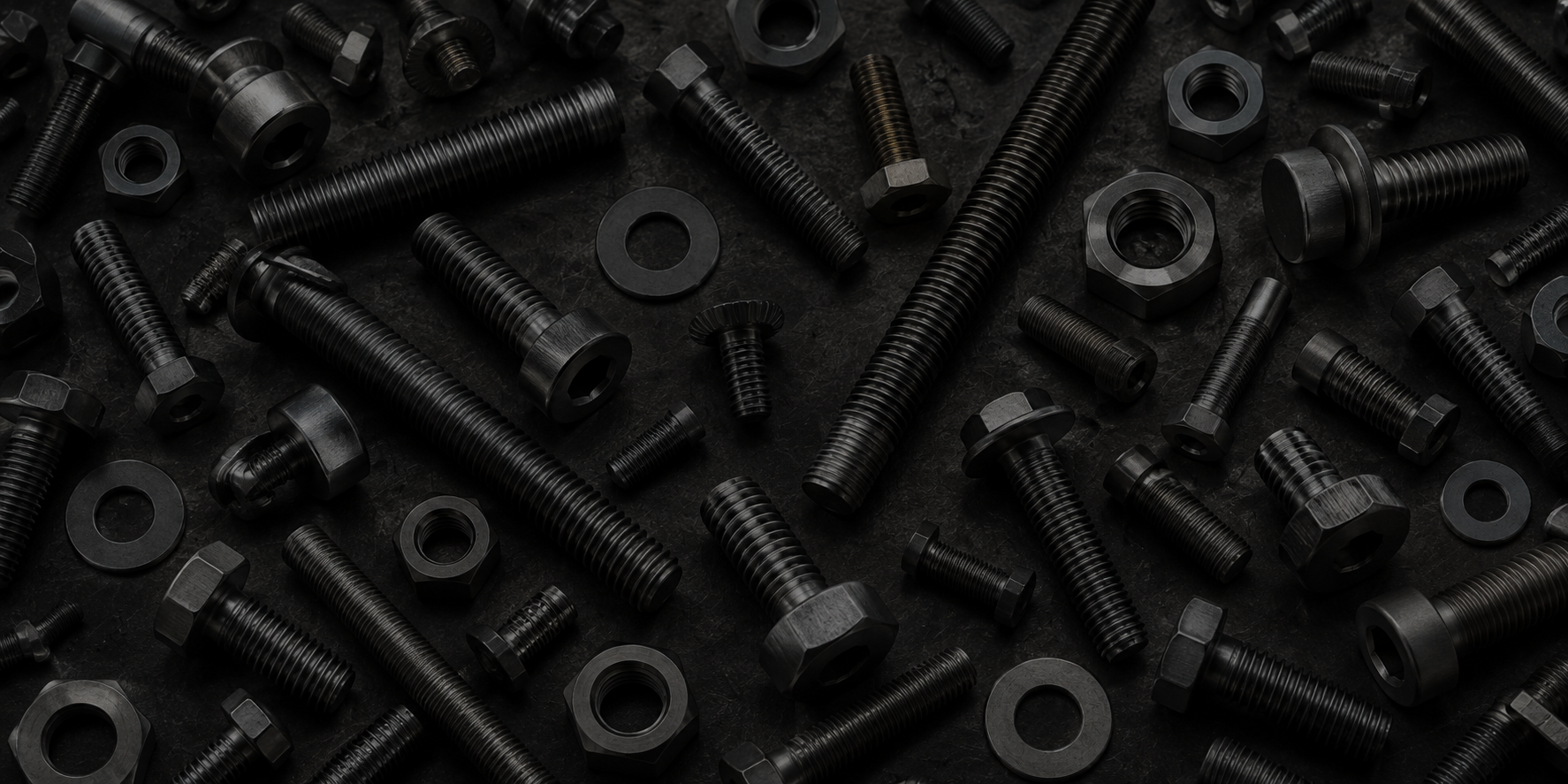
An industrial fastener can seem like a vague or high-end term when you first encounter it in a drawing, bill of materials, or supplier quotation. This confusion can lead buyers to focus on price or appearance instead of the real risks. I find that the clearest solution is to define fasteners by their industrial job, service conditions, and specified controls.
An industrial fastener is a bolt, screw, stud, nut, washer, or related joining component used in industrial equipment, projects, manufacturing, or maintenance.1 It may be a common carbon-steel or stainless-steel item, or it may require a specialty alloy, custom dimensions, and detailed inspection records. The correct requirement depends on the application, specification, operating environment, and consequences of failure.
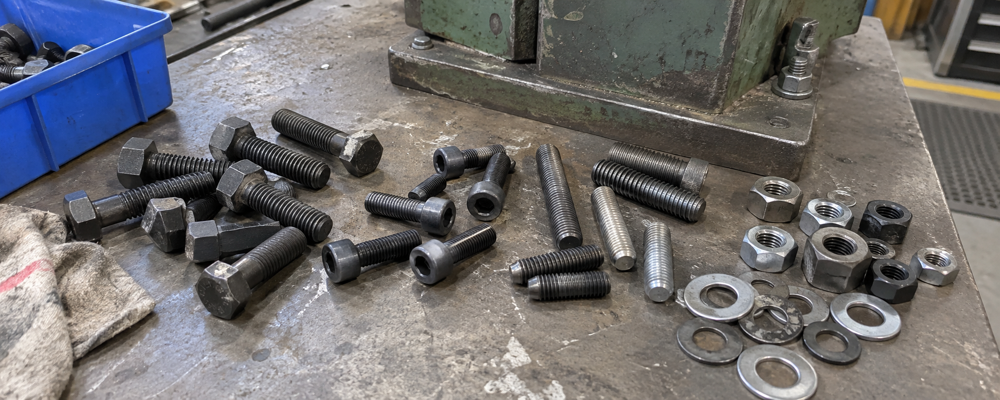
The term does not automatically describe one material grade, one strength level, or one price category. In my communication with overseas buyers, I often see newcomers assume that industrial means “special alloy” or “extreme performance.” In reality, the purchasing decision starts with a more practical question: what must the connection safely do in its actual operating environment?
What Makes a Fastener an Industrial Fastener?
A buyer may see two hex bolts that look almost identical and assume they serve the same purpose. That assumption can create problems when the bolts face different loads, temperatures, corrosion exposure, or inspection requirements. The answer is to evaluate the complete service context rather than judging a fastener by its appearance.
An industrial fastener is defined mainly by its intended industrial use and specified performance requirements. Common bolts, screws, nuts, studs, and washers can all be industrial fasteners when they are used in machinery, process equipment, construction projects, maintenance work, or OEM assemblies. The material and quality controls must match the buyer’s technical requirements.
Industrial Does Not Always Mean Specialty Alloy
An industrial fastener may be made from:
- Carbon steel
- Alloy steel
- Stainless steel, such as 304 or 316
- Duplex or super duplex stainless steel
- Precipitation-hardening stainless steel
- Nickel alloys, such as Inconel, Monel, Incoloy, or Hastelloy
- Titanium and titanium alloys
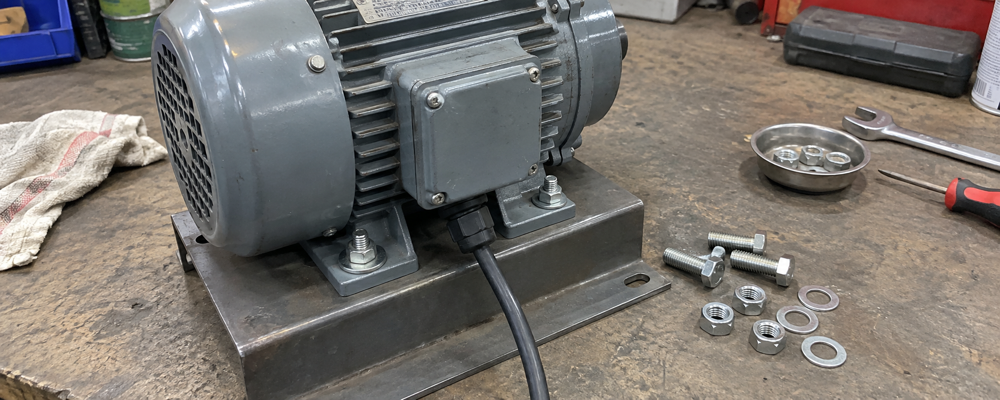
The material alone does not determine whether a product is industrial. For example, a carbon-steel hex bolt used in factory equipment can be an industrial fastener. A 316 stainless steel screw installed in a food-processing machine can also be an industrial fastener. Both may be suitable if the application, applicable standard, and buyer specification support their use.
At the same time, a more demanding service environment may need a more controlled product. Chemical processing equipment may require corrosion-resistant materials. Offshore equipment may require consideration of seawater-related exposure. High-temperature equipment may require materials and mechanical conditions that remain suitable at specified temperatures.
I have seen inquiries where the buyer initially asks only for “industrial bolts.” Once we discuss the requirement, the scope becomes clearer. The customer may need a standard ASTM or DIN item. Another customer may need a stud bolt with a defined alloy, thread form, heat-treatment condition, and material documentation. These are both industrial requirements, but they are not the same procurement task.
The Operating Context Changes the Requirement
The key distinction is often the consequence of fastener failure. A loose bolt on a low-risk enclosure and a failed stud in a pressurized process connection do not create the same commercial or operational concern.
Buyers should consider:
| Evaluation factor | Why it matters for industrial fasteners |
|---|---|
| Application | Equipment type and connection purpose affect the required product design. |
| Load | Static, cyclic, vibration, tension, and shear loads can affect the specification. |
| Temperature | Heat or thermal cycling may change material and performance considerations. |
| Corrosion exposure | Chemicals, humidity, seawater, and outdoor exposure can affect material selection. |
| Thread and dimensions | Correct fit is necessary for assembly, preload, and interchangeability. |
| Standard or drawing | A recognized standard or approved drawing defines the required characteristics. |
| Failure consequence | Higher-risk connections may require more verification or project controls. |
An industrial fastener is not simply a “better bolt.” It is a fastening component evaluated against an industrial duty and an agreed requirement.
I do not treat material selection as a universal formula. The buyer’s engineering team, project specification, relevant standard, and qualified technical review should determine what is acceptable for a specific application.
Which Products Are Considered Industrial Fasteners?
Many junior buyers know the word “bolt” but may not realize how many components can form part of an industrial fastening system. This can cause incomplete requests for quotation, mismatched components, or uncertainty about what should be inspected. A clear product breakdown helps procurement teams ask suppliers the right questions.
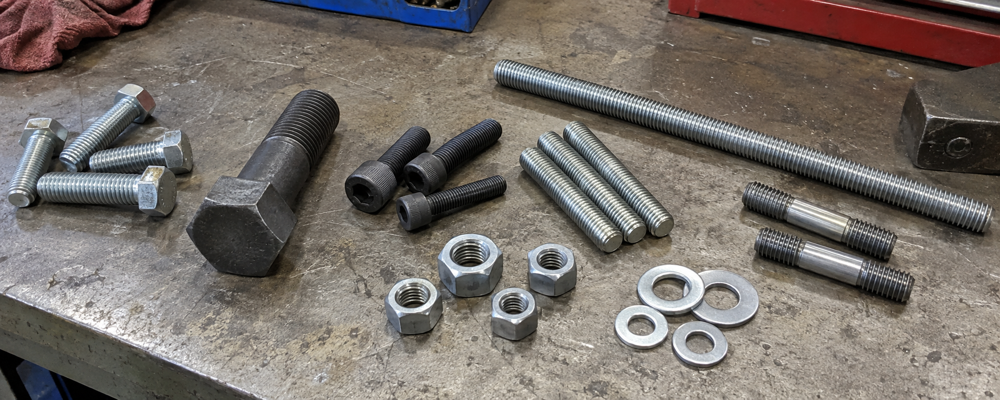
Industrial fasteners include bolts, screws, stud bolts, threaded rods, nuts, washers, and custom machined fastening components. Each product type performs a different function in an assembly, and the required dimensions, threads, materials, and standards are typically confirmed by the buyer’s specification or drawing.
Common Industrial Fastener Categories
At CHENGGE, our discussions with industrial customers often involve standard products alongside drawing-based or non-standard components. The following categories are common in industrial sourcing.
| Product type | Typical role in an assembly | Common buyer considerations |
|---|---|---|
| Hex bolts | General bolted connections in equipment and structures | Head style, diameter, length, thread, grade, coating |
| Heavy hex bolts | Larger or more robust bolted joints | Standard, strength class, nut compatibility, dimensions |
| Socket head cap screws | Compact assemblies and recessed installation areas | Head clearance, socket size, thread length, material |
| Stud bolts | Flanged joints and assemblies where nuts are used on both ends | Overall length, thread engagement, nut pairing, material |
| Double-end studs | Equipment housings, covers, and tapped-hole connections | Different thread lengths, special ends, drawing details |
| Threaded rods | Supports, hangers, anchoring, and adjustable connections | Length, thread form, straightness, material |
| Nuts | Mating components for bolts and studs | Grade compatibility, thread fit, dimensions |
| Washers | Load distribution, surface protection, or locking functions | Type, hardness, outside diameter, thickness |
| Custom machined parts | Special assemblies or proprietary equipment | Drawing revision, tolerances, material, inspection points |
A Fastener System Is Often More Than One Part
A procurement request should not always focus on one component in isolation. A stud bolt, for example, may need compatible nuts and washers. The nut material and strength condition may matter just as much as the stud itself.
A buyer should confirm whether the request includes:
- The main fastening component, such as a bolt or stud.
- Matching nuts, including the required type and material.
- Washers, if the assembly design requires them.
- Surface treatment or coating, where specified.
- Documentation, where required by the project.
- Packaging and identification, especially for mixed sizes or project kits.
In one type of inquiry, a customer may request a standard set of bolts and nuts for resale or maintenance stock. In another, an EPC contractor may need multiple line items packed by equipment tag, area, or project package. The products may look similar, but the commercial and quality requirements can be very different.
For this reason, I encourage buyers to describe the whole assembly where possible. A supplier can usually evaluate a request more accurately when the relationship between bolts, nuts, washers, drawings, and application conditions is clear.
How Are Industrial Fastener Requirements Specified?
An incomplete request can make it difficult for a supplier to quote accurately or confirm whether the offered product matches the intended use. A buyer may write “stainless steel bolts” when the actual requirement involves a certain diameter, thread pitch, length, material condition, and inspection document. A complete requirement set reduces avoidable technical and commercial risk.
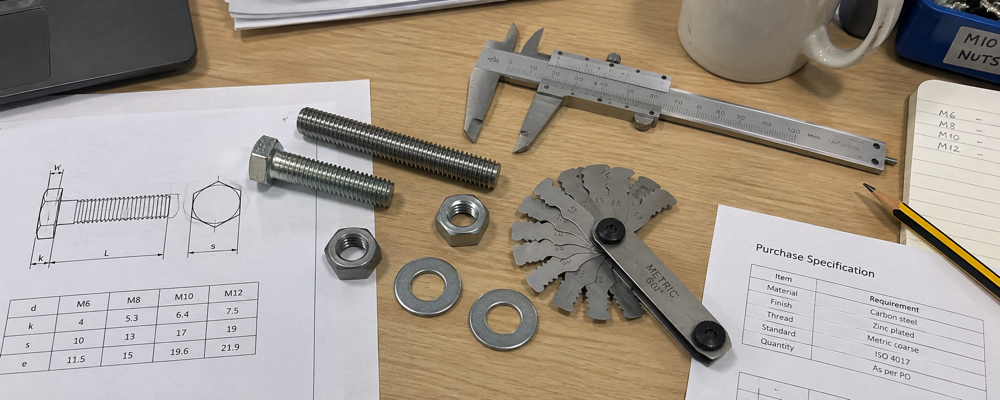
An industrial fastener should be specified through a clear combination of product type, material, dimensions, thread, standard or drawing, mechanical condition, quantity, and any required documentation. The buyer’s approved specification normally determines which of these details are mandatory for a particular order.
The Minimum Information for a Useful Inquiry
When I receive a new fastener inquiry, I normally look for the basic details below before discussing lead time or a formal quotation.
| Requirement | Example of useful information |
|---|---|
| Product type | Hex bolt, stud bolt, socket head cap screw, nut, washer |
| Material | ASTM Grade 5 titanium, Alloy 625, 316Ti, 17-4PH, or another specified grade |
| Size | M16 × 80 mm, 3/4"-10 UNC × 200 mm, or drawing dimensions |
| Thread | Metric coarse, metric fine, UNC, UNF, 8UN, BSP, or custom thread |
| Standard | ASTM, ASME, DIN, ISO, EN, JIS, or customer specification |
| Drawing | Latest revision number and clearly marked technical requirements |
| Mechanical condition | Heat treatment, strength class, hardness, or other specified condition |
| Quantity | Quantity per size and total project quantity |
| Documentation | Material certificate, dimensional report, PMI, hardness report, or traceability records where required |
| Commercial conditions | Delivery location, required date, packaging, Incoterms, and payment terms |
Standards and Drawings Control the Details
A standard product may be purchased to a defined specification. For example, a buyer may specify an ASTM, ASME, DIN, ISO, or EN requirement. That standard can define dimensions, tolerances, material expectations, marking, or testing provisions.
A custom industrial fastener often requires a drawing. The drawing should identify the latest revision and include important details such as:
- Overall length and thread lengths
- Thread designation and class of fit
- Head style or end configuration
- Material designation
- Surface finish
- Tolerances
- Heat-treatment requirement, if applicable
- Inspection points
- Marking or packaging instructions
I have found that drawing revision control is especially important for custom specialty alloy fasteners and machined components. A small change in thread length, underhead radius, or tolerance can affect compatibility with the mating part. Buyers should avoid assuming that an older sample or a previous purchase order automatically represents the current technical requirement.
Documents Are Requirement-Dependent
Certificates, test reports, and traceability records can be important in industrial procurement. However, they are not automatically required for every order.
Depending on the project, a buyer may request:
- Material test certificates
- Heat or lot traceability
- Dimensional inspection reports
- Thread inspection records
- Hardness reports
- Positive material identification records
- Third-party inspection arrangements
- Certificate of conformity
- Packing lists with item-level identification
The correct level of documentation depends on the customer’s specification, project rules, application, and contractual requirements. Buyers should state documentation needs before production whenever possible. This helps suppliers evaluate material sourcing, inspection planning, cost, and lead time more reliably.
When Does an Industrial Fastener Need Higher-Performance Materials?
It is easy to assume that every industrial project needs the most corrosion-resistant or high-temperature alloy available. That approach can increase cost without solving the real application issue. On the other hand, choosing only by lowest price can overlook critical service conditions. A balanced evaluation starts with the actual environment and project requirement.
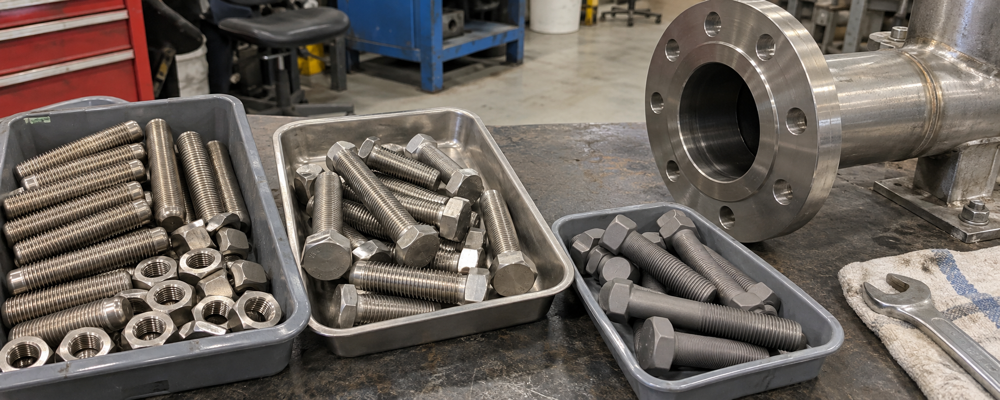
An industrial fastener may require higher-performance materials when the specified service conditions involve elevated temperature, corrosion, aggressive chemicals, marine exposure, high mechanical demand, or strict project controls. Specialty alloys such as Inconel, Monel, duplex stainless steel, or titanium are used where the buyer’s verified requirements call for them, not as a default for every industrial application.2
Common Reasons for Material Upgrades
Specialty alloys and controlled fastener materials may appear in industrial inquiries for several reasons:
- Corrosion resistance: Chemical media, chloride exposure, seawater-related conditions, or process fluids may require a specified material.
- Elevated temperature: Industrial furnaces, thermal equipment, turbines, exhaust systems, and process equipment may operate under defined temperature conditions.
- Strength requirements: Some connections require a particular mechanical condition or strength level.
- Weight considerations: Certain aerospace-related or specialized equipment supply chains may specify titanium or other materials.
- Project standardization: A plant owner, OEM, or EPC contractor may define approved materials for consistency and maintenance planning.
- Compatibility: The fastener material may need to work with the connected equipment materials and the overall joint design.
For example, an inquiry for Alloy 625 stud bolts usually signals that the customer has a specific material requirement connected to their project or equipment specification. It does not mean Alloy 625 is universally “better” than stainless steel or carbon steel. Each material has different properties, availability, processing considerations, and cost implications.
Material Names Are Not Interchangeable Approval
Buyers should be careful with familiar material names. A broad family name, such as “Inconel,” “duplex stainless steel,” or “titanium,” does not provide enough information for a purchase order.
The buyer should confirm:
- The exact grade or recognized designation.
- The applicable material standard.
- Required product form and mechanical condition.
- Any heat-treatment or aging condition.
- Required documents and traceability.
- Whether substitutions need formal approval.
For instance, 2205 and 2507 are both commonly described as duplex-family stainless steels, but they are not simply interchangeable. Likewise, Alloy 600, Alloy 601, Alloy 625, Alloy 718, and X-750 belong to a nickel-alloy family but have different characteristics and common application contexts.
At CHENGGE, we work with specialty alloy fasteners and custom machined components based on buyer drawings and confirmed requirements. We do not treat a material name as sufficient technical approval by itself. The purchaser should verify the full specification and seek qualified engineering evaluation for application-specific material decisions.
How Should Buyers Evaluate an Industrial Fastener Supplier?
A low unit price can be attractive, especially when a project includes many fastener sizes. However, an incomplete quotation, unclear material basis, or missing inspection capability can create more cost later. Buyers need a practical way to compare suppliers beyond the first quoted number.
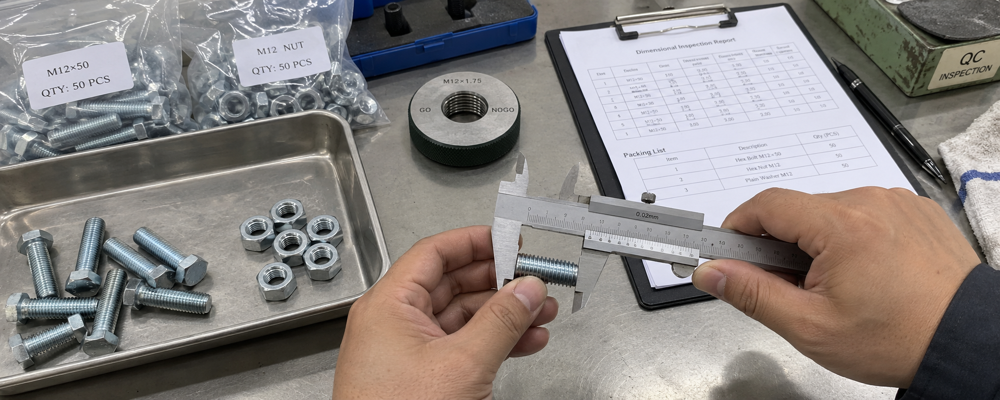
Buyers should evaluate an industrial fastener supplier by its ability to understand the requirement, confirm material and manufacturing scope, control dimensions and threads, provide agreed documentation, communicate clearly, and deliver according to the confirmed order conditions.3 The right supplier depends on the product complexity and project requirements.
Questions to Ask Before Placing an Order
I recommend that procurement teams use a structured supplier review, especially for specialty materials, custom parts, or project-critical applications.
| Supplier evaluation area | Questions buyers can ask |
|---|---|
| Requirement review | Does the supplier identify missing dimensions, thread details, or drawing conflicts? |
| Material control | Can the supplier explain the proposed material basis and available supporting documents? |
| Manufacturing scope | Can the supplier produce the required product type, size, and quantity? |
| Inspection | What dimensional, thread, or material-related checks can be arranged where required? |
| Documentation | Can the supplier provide the documents stated in the purchase requirement? |
| Communication | Are technical deviations and commercial assumptions stated clearly? |
| Lead time | Does the quoted lead time reflect material availability, production, inspection, and shipping? |
| Traceability | Can packing and documents be linked to the agreed lot or order identification where required? |
| Custom capability | Can the supplier review drawings and manage non-standard features? |
Look for Clear Boundaries, Not Overconfident Promises
A reliable supplier should not automatically say yes to every requirement without review.4 In my experience, a careful supplier asks questions when the inquiry lacks a standard, drawing revision, thread class, material condition, or document requirement.
That process can feel slower at the beginning, but it may prevent problems later. For example, if a buyer requests “M20 stud bolts, stainless steel,” the supplier may need to ask:
- What stainless steel grade is required?
- What is the thread pitch?
- Is the thread full length or partial length?
- What is the overall length?
- Are nuts and washers included?
- Is there an applicable standard?
- Are material certificates required?
- Is the requirement for stock, maintenance, resale, or a project?
These questions are not unnecessary complications. They help turn a general product request into a purchasable item with a clearer basis for inspection and acceptance.
Procurement Should Compare Total Risk, Not Only Price
The lowest quotation may not represent the lowest total cost. Buyers should also consider:
- The risk of receiving an incorrect thread or dimension
- The cost of missing documents
- The impact of a delayed project package
- The need for replacement material
- Communication time spent resolving unclear details
- Compatibility risks between fasteners and mating components
For routine, standard fasteners, the evaluation can be simple. For custom or specialty alloy items, a more detailed review is usually appropriate. I encourage buyers to align the supplier evaluation effort with the importance of the connection and the project’s stated requirements.
Frequently Asked Questions
Are industrial fasteners always high-strength fasteners?
No. Industrial fasteners are not always high-strength products. The term covers many bolts, screws, nuts, studs, washers, and related parts used in industrial settings. The required strength class depends on the application, connection design, standard, and buyer specification.
Is stainless steel considered an industrial fastener material?
Yes. Stainless steel fasteners, including common grades such as 304 or 316 where specified, are widely used in industrial equipment and maintenance. Their suitability depends on the actual environment, mechanical requirements, applicable standards, and project approval—not only on the stainless steel label.
What information should I send when requesting an industrial fastener quote?
You should provide the product type, material, dimensions, thread, applicable standard or drawing, quantity, and required documents. You should also state any special requirements for inspection, packaging, delivery date, or third-party verification. A complete inquiry supports a more accurate quotation.
Do all industrial fasteners need material certificates?
No. Material certificates are requirement-dependent. Some customers need material test certificates, traceability, dimensional reports, or other records for project control. Other routine industrial orders may have simpler documentation requirements. Buyers should state document needs before ordering.
Are specialty alloy fasteners better than carbon-steel fasteners?
Specialty alloy fasteners are not automatically better for every use. They may be specified for certain corrosion, temperature, strength, or project-control requirements. Carbon steel, alloy steel, and stainless steel can also be appropriate industrial choices when they meet the confirmed application and specification.
Conclusion
An industrial fastener is best understood as a fastening component used in an industrial duty, not as a synonym for expensive, oversized, or exotic-alloy hardware. A carbon-steel bolt, stainless steel nut, specialty alloy stud bolt, or custom machined component can all be industrial fasteners when they meet the required application, dimensions, materials, and controls. Before sourcing, buyers should clarify the standard, drawing, thread, material condition, quantity, and document requirements. If you are sourcing specialty alloy fasteners or drawing-based components, contact CHENGGE at [email protected] to discuss your confirmed requirements.
"ISO/TC 2 - Fasteners", https://www.iso.org/committee/45446.html. The Industrial Fasteners Institute defines an industrial fastener as a mechanical component used to join or secure parts in industrial equipment and structures, encompassing bolts, screws, nuts, and washers. Evidence role: definition; source type: institution. Supports: Supports the definition of an industrial fastener as a component used in industrial applications.. Scope note: The definition may vary slightly across different standards organizations. ↩
"Duplex stainless steel", https://en.wikipedia.org/wiki/Duplex_stainless_steel. Industry literature on fastener materials confirms that specialty alloys like Inconel and duplex stainless steel are specified for demanding environments, not as a default choice. Evidence role: general_support; source type: research. Supports: Supports the selective use of specialty alloys based on verified requirements.. Scope note: The prevalence of these materials varies by industry sector. ↩
"Use of quality assurance systems in the fastener industry", https://nvlpubs.nist.gov/nistpubs/Legacy/IR/nistir6001.pdf. Procurement best practices from the Industrial Fasteners Institute emphasize evaluating suppliers on technical capability, quality control, documentation, and communication. Evidence role: general_support; source type: institution. Supports: Supports the criteria for evaluating industrial fastener suppliers.. Scope note: The relative importance of each criterion may vary by project complexity. ↩
"Managing Relationships with Suppliers and Vendors You Use", https://www.apu.apus.edu/area-of-study/business-and-management/resources/managing-relationships-with-suppliers-and-vendors-you-use/. Supply chain management literature advises that reliable suppliers conduct thorough requirement reviews to avoid misunderstandings and ensure product conformity. Evidence role: general_support; source type: education. Supports: Supports the idea that reliable suppliers review requirements before accepting orders.. Scope note: This principle is general and not specific to fasteners. ↩