Extreme high strength fasteners can create sourcing problems when buyers rely on a strength label alone. A number such as 12.9 may look clear, yet it can hide unanswered questions about the applicable standard, material, dimensions, heat treatment, environment, and required documentation. We recommend evaluating the complete specification before comparing suppliers or quotations.
Extreme high strength fasteners are not defined by one universal strength threshold. Buyers should evaluate the applicable product standard, property-class system, material grade, dimensions, manufacturing condition, joint design, service environment, and verification documents together. Higher tensile strength does not automatically create a safer or more reliable bolted joint; the correct selection requires qualified engineering review for the actual application.
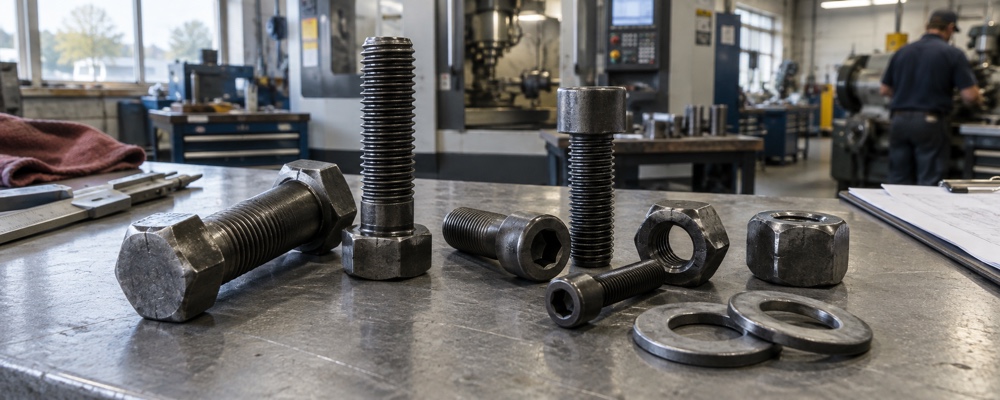
In our export communications at CHENGGE, we often receive RFQs that list only “high-strength bolts” or a property class. That is usually a useful starting point, but it is not enough for an accurate technical or commercial comparison. The details below explain the questions that help purchasing, quality, and engineering teams reduce ambiguity.
What Are Extreme High Strength Fasteners?
Buyers need a practical way to describe demanding fastening requirements, but broad terms can lead to incorrect assumptions. The phrase “extreme high strength” may be used in catalogs, project discussions, or informal RFQs, yet its meaning can change across standards, material systems, and applications.
Extreme high strength fasteners are fasteners selected for applications that require elevated mechanical performance, but the term itself is not a universally binding product classification1. A buyer should interpret any stated strength level through the relevant fastener standard, material specification, size range, manufacturing route, and documented test requirements.

A commercial term is not always a technical specification
In practice, a buyer may use “extreme high strength” to describe:
- A bolt with a high property class under a specific metric fastener standard.
- A high-strength alloy steel fastener with controlled heat treatment.
- A precipitation-hardening stainless steel fastener for a corrosion-sensitive application.
- A nickel alloy fastener needed for high-temperature or corrosive service.
- A custom bolt, stud, or machined component designed around a drawing and defined mechanical requirements.
These descriptions are not interchangeable. A property class commonly associated with carbon or alloy steel fasteners cannot automatically be transferred to stainless steel, titanium, nickel alloy, or other specialty alloy fasteners.2
For example, a purchaser may request a “12.9 equivalent” fastener while also asking for corrosion resistance in marine, chemical, or offshore equipment. That wording needs clarification. The original property-class reference may be tied to a particular standard and product category. A corrosion-resistant alloy may follow another material specification, test method, and acceptance basis.
Why “12.9 and above” needs context
We often see buyers use phrases such as “12.9 or above” as a shorthand for demanding strength requirements. That can be commercially understandable, but it should not be treated as a universal definition of extreme high strength fasteners.
A property class may be meaningful only when all of the following are clear:
| Evaluation Point | Why It Matters |
|---|---|
| Applicable product standard | Defines the property-class system, dimensions, tolerances, and test methods |
| Product type | A hex bolt, socket head cap screw, stud bolt, and threaded rod may not follow the same requirements |
| Nominal diameter and thread | Some mechanical-property provisions vary by size range and thread form |
| Material and manufacturing route | Material chemistry, cold working, heat treatment, and machining can affect results |
| Required condition | The required delivery condition may affect mechanical performance and suitability |
| Test and inspection scope | A test certificate must correspond to agreed requirements, not only a material name |
At CHENGGE, our team treats broad strength terms as a prompt for clarification rather than as a complete manufacturing instruction. We support quotations for specialty alloy bolts, stud bolts, nuts, washers, threaded rods, and custom machined components. However, supply feasibility always depends on the confirmed specification, quantity, inspection scope, and order conditions.
A high-strength label can begin an RFQ. It should not end the technical review.
How Do Material Strength, Property Class, and Joint Performance Differ?
A common sourcing mistake is to treat material strength, fastener property class, and connection reliability as the same thing. They are related, but they answer different questions. This distinction matters when buyers compare alternative suppliers, materials, or manufacturing methods.
Material strength describes properties of a material in a defined condition. A fastener property class describes requirements under an applicable standard. Actual joint performance depends on the complete assembled connection, including preload, installation method, mating parts, geometry, operating loads, and environment.3
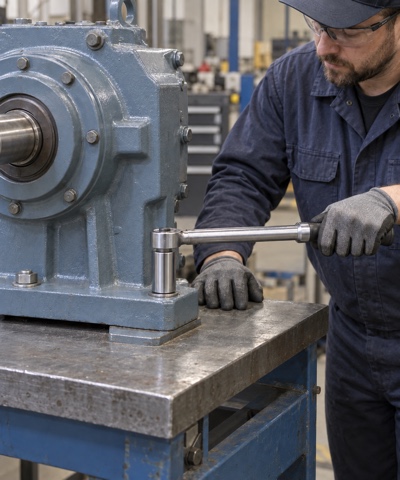
Material strength is only one part of the picture
A material designation may indicate a family of chemical and mechanical characteristics, but it does not independently define every finished fastener requirement. The final fastener can be affected by:
- Raw-material form and source
- Chemical composition limits
- Forging, machining, rolling, or thread-forming method4
- Heat-treatment process and final condition
- Surface condition and coating process
- Thread geometry and stress concentration
- Dimensional tolerances
- Inspection and sampling requirements
For specialty alloys, buyers may specify materials such as Inconel, Monel, Hastelloy, duplex stainless steel, super duplex stainless steel, titanium alloy, or precipitation-hardening stainless steel. Each material family may be chosen for a different balance of corrosion resistance, elevated-temperature behavior, mechanical properties, or other application-specific requirements.
However, a material name alone does not confirm that a finished fastener is suitable for a particular connection. The buyer should verify the relevant product specification and the agreed acceptance criteria.
Property class is not a blanket substitute for a material grade
A property class is generally part of a defined standard system. It may set mechanical-property expectations for certain types of fasteners within a specified scope. It is therefore important not to use it as a universal substitute for a material grade.
For procurement teams, the difference can be summarized as follows:
| Term | Main Question It Answers | What It Does Not Answer Alone |
|---|---|---|
| Material grade | What alloy or steel family is requested? | Finished fastener dimensions, property class, or application suitability |
| Property class | What mechanical requirements apply under a specific standard? | Corrosion resistance, temperature suitability, or joint design adequacy |
| Heat-treatment condition | What processing condition is required or agreed? | Complete service performance in every environment |
| Coating or surface treatment | What surface condition is required? | Whether the coating is compatible with the joint, temperature, or chemical exposure |
| Joint performance | How will the assembled connection behave in service? | This cannot be confirmed through a bolt tensile value alone |
Actual joint performance requires assembly-level review
A bolted joint depends on more than the fastener. The final performance can be influenced by:
-
Installation method
Torque, angle control, tensioning method, lubrication, and tool calibration can affect achieved preload.5 -
Mating components
Flange materials, joint thickness, washers, nuts, thread engagement, and bearing surfaces all matter. -
Service loading
Static load, vibration, cyclic loading, shock, pressure, and thermal cycling may affect the connection differently.6 -
Environment
Corrosive media, humidity, salt exposure, hydrogen-related risks, and elevated temperatures need application-specific assessment. -
Maintenance practice
Inspection intervals, re-tightening procedures, and replacement policies can affect long-term reliability.
We work primarily from buyer specifications, drawings, and RFQ information. We can help identify missing commercial and technical details for quotation purposes. Still, we do not present an RFQ review as a substitute for connection design, failure analysis, or application-specific engineering validation by qualified professionals.
What Risks Should Buyers Review for Extreme High Strength Fasteners?
High mechanical strength can be valuable, but it may also increase the importance of controlling material condition, manufacturing quality, installation, and environmental exposure. Buyers should avoid assuming that a higher-strength option will automatically reduce all connection risks.
Buyers should review brittle-fracture risk, fatigue conditions, hydrogen-related concerns, installation preload, coating compatibility, and service environment when evaluating extreme high strength fasteners. The relevant risks and acceptance methods depend on the applicable standard, material, processing route, and actual operating conditions.

Brittle behavior needs application-specific attention
A fastener with high mechanical strength may have different toughness, ductility, or fracture behavior than a lower-strength alternative.7 The relevant concern is not simply whether a fastener has a high tensile value. The concern is whether the finished product, in its delivered condition, is suitable for the anticipated loading and environment.
A qualified engineering review may need to consider:
- Operating temperature range
- Dynamic or impact loading
- Stress concentrations near threads or transitions
- Material condition and heat treatment
- Notches, surface damage, or handling damage
- Relevant toughness or testing requirements where specified
We recommend that buyers define any project-specific testing requirements in the RFQ rather than assuming that a general material certificate will cover every service risk.
Fatigue performance depends on the complete connection
Fatigue is another area where simple strength comparisons can mislead. Cyclic loading can be affected by preload consistency, thread form, surface condition, joint stiffness, alignment, vibration, and load distribution.8 The bolt is only one component in the system.
For example, an equipment manufacturer may request high-strength socket head cap screws for a compact assembly. The RFQ may state the diameter, thread, and strength level, but omit information about vibration, repeated thermal cycles, or tightening method. Those omissions may not prevent a preliminary quotation, but they can limit a supplier’s ability to assess whether additional documentation or controls are needed.
Hydrogen-related embrittlement or other hydrogen-associated risks are technical subjects that require qualified evaluation. The relevant exposure can depend on the material, hardness or strength condition, cleaning method, coating process, plating process, cathodic protection system, service environment, and post-treatment controls.9
A buyer should not assume that every coating or surface treatment is suitable for every high-strength fastener.10 Instead, the RFQ should identify:
- Required coating or surface finish
- Applicable coating standard, if any
- Corrosion-resistance expectations
- Restrictions on process routes
- Required post-treatment or inspection documentation
- Project or end-user requirements
CHENGGE can review agreed surface-treatment requests during the quotation process. We recommend that customers verify coating compatibility and hydrogen-related controls with qualified technical personnel when their application requires it.
How Should Buyers Specify Extreme High Strength Fasteners in an RFQ?
Incomplete RFQs make it difficult to compare prices, lead times, quality documents, and supply feasibility. A detailed request also helps prevent suppliers from quoting different assumptions under the same product description.
A complete RFQ for extreme high strength fasteners should state the product standard, material or grade, dimensions and thread, mechanical-property requirements, manufacturing or heat-treatment condition, surface treatment, quantity, inspection scope, and certificate or traceability requirements. Drawings and service-condition notes are especially valuable for custom parts.

The practical RFQ checklist
We suggest that OEM teams, EPC buyers, and industrial distributors use the following checklist before requesting quotations.
| RFQ Item | What to Include | Why It Helps |
|---|---|---|
| Product type | Hex bolt, heavy hex bolt, stud bolt, threaded rod, nut, washer, socket head cap screw, or custom part | Prevents product-form assumptions |
| Applicable standard | Product, material, and testing standards where required | Establishes the technical baseline |
| Material or grade | Full requested grade, alloy family, or customer specification | Supports correct raw-material evaluation |
| Dimensions | Diameter, length, thread type, pitch, thread length, head style, and tolerances | Enables accurate manufacturing review |
| Mechanical requirements | Property class or specified mechanical properties under the relevant standard | Clarifies the acceptance basis |
| Condition | Heat-treated, solution treated, aged, cold worked, or another specified condition | Links requirements to manufacturing route |
| Surface treatment | Coating, plating, passivation, lubrication, or other finish | Helps evaluate compatibility and process needs |
| Quantity | Required quantity, lot arrangement, and possible annual demand | Supports MOQ and production planning |
| Inspection scope | Dimensional inspection, thread gauges, mechanical tests, PMI, NDT, or customer witness requirements | Defines quality planning |
| Documentation | MTC, certificate of conformity, inspection report, traceability records, or project forms | Allows comparable document quotations |
| Service notes | Corrosive media, temperature, pressure, vibration, or end-use restrictions when available | Flags issues requiring technical review |
| Drawing revision | Latest controlled drawing and revision level for custom components | Reduces revision-related errors |
Questions we often send back to buyers
Our team has seen a recurring RFQ pattern: the buyer provides a strength class and basic size, while several other critical details remain open. We usually ask focused questions rather than guessing.
Typical clarification questions include:
- Which product standard applies to this fastener?
- Is the listed material mandatory, or is an approved alternative possible?
- Does the customer require a specific manufacturing or heat-treatment condition?
- Are nuts, washers, or mating components required as a complete set?
- Does the project require material traceability or heat-number linkage?
- Which inspection documents are mandatory at shipment?
- Is there a coating, passivation, or lubricant requirement?
- Does the drawing include special threads, reduced shanks, drilled heads, or other non-standard features?
- Is the RFQ for budget pricing, tender support, sample evaluation, or a confirmed purchase requirement?
These questions are not unnecessary delays. They help suppliers quote on a comparable basis and help buyers avoid selecting a low price that excludes needed testing, material controls, or documentation.
Comparing quotations fairly
A quotation comparison should go beyond unit price. Buyers should check whether each supplier has quoted the same assumptions.
A useful comparison sheet can include:
- Confirmed standard and material
- Included inspection scope
- Certificate type and traceability level
- Manufacturing route or agreed condition
- Surface-treatment scope
- Packaging and marking requirements
- Lead time and delivery term
- Quantity basis and MOQ
- Technical deviations, if any
At CHENGGE, we encourage customers to identify deviations early. This is particularly important for custom specialty alloy fasteners and machined components, where a drawing, material condition, and inspection plan may all influence feasibility and cost.
How Can Buyers Evaluate Suppliers of Extreme High Strength Fasteners?
Supplier evaluation should consider whether a supplier can understand and document the requested specification, not only whether it can offer a stated strength level. The right supplier may differ depending on the material, product form, quantity, certification requirements, and project schedule.
When sourcing extreme high strength fasteners, buyers should assess a supplier’s specification-review process, manufacturing capability for the requested product, quality-document controls, communication speed, and willingness to identify technical gaps. Buyers should verify certifications, inspection capabilities, and traceability records against their own project requirements.
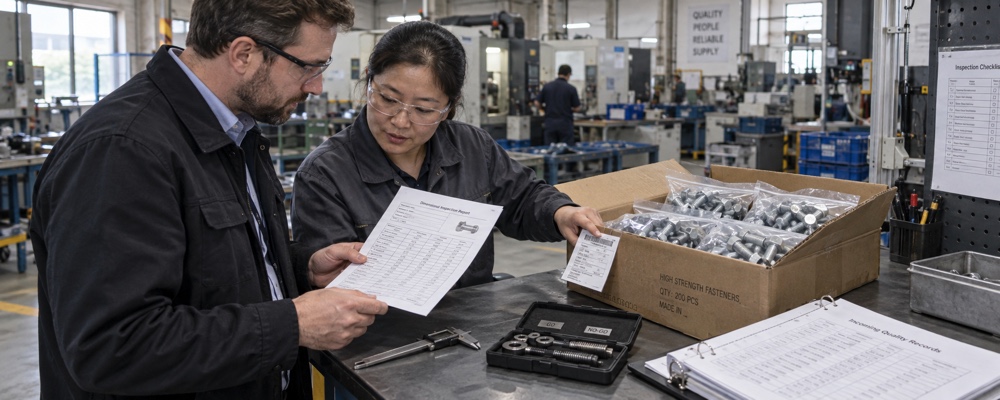
Look for disciplined specification communication
A capable supplier should be able to distinguish between confirmed requirements and assumptions. This does not mean the supplier must redesign the customer’s joint. It means the supplier should communicate clearly about what it is quoting.
During supplier qualification, buyers can ask:
- Can the supplier identify the applicable product and material standards?
- Can the supplier confirm the requested dimensions and thread details?
- Can the supplier explain which inspection records are included?
- Can the supplier identify technical deviations before order placement?
- Can the supplier confirm whether the order quantity meets actual production conditions?
- Can the supplier provide a clear lead-time basis?
- Can the supplier support custom drawings where feasible?
Verify documents rather than relying on labels
Certificates, inspection reports, and quality-system documents can be important, but buyers should verify their relevance to the order. A document should match the agreed product, material, lot, specification, and inspection scope.11
Depending on the project, buyers may request documents such as:
- Material test certificates
- Certificates of conformity
- Dimensional inspection reports
- Thread inspection records
- Mechanical test reports
- Positive material identification reports where agreed
- Heat or lot traceability records
- Third-party inspection records where contractually required
The required documents should be stated before production whenever possible. Retrospective requests can create delays or may not be feasible if the agreed inspection plan did not include certain tests or records.
Our approach at CHENGGE
At CHENGGE, we support overseas B2B customers sourcing specialty alloy fasteners, standard fasteners, drawing-based custom fasteners, and related machined components. Our export sales and customer-communication team draws on recurring industrial RFQs, quotations, and technical discussions, with support from experienced internal technical specialists.
We focus on clarifying product requirements before presenting supply options. We do not assume that a material name, a strength label, or a previous order description automatically confirms every technical requirement for a new project. Each inquiry should be reviewed against its own drawing, specification, quantity, inspection, and delivery conditions.
For safety-critical, high-temperature, corrosive, fatigue-sensitive, or otherwise demanding applications, buyers should also involve qualified engineers and applicable project authorities in final selection and approval.
Frequently Asked Questions
Is 12.9 always considered an extreme high strength fastener?
No. A 12.9 designation should be interpreted within the relevant fastener standard and property-class system.12 It may be used informally to describe high-strength requirements, but it is not a universal definition for all fastener types, materials, sizes, or industrial applications.
Does a higher tensile strength always create a stronger bolted joint?
No. Actual joint performance depends on preload, installation method, mating parts, thread engagement, service loads, vibration, environment, and other assembly factors. Higher tensile strength may be relevant, but it does not automatically make a connection safer or more reliable.
What documents should I request for high-strength industrial fasteners?
The required documents depend on the project. Buyers often request material certificates, certificates of conformity, dimensional reports, mechanical test records, thread inspection records, and traceability documents. The RFQ should state the required document type, standard, and inspection scope before production.
Can specialty alloys be used for extreme high strength fasteners?
Some specialty alloys may be selected for demanding mechanical, corrosion, or temperature conditions. However, material selection must be based on the applicable specification and actual service environment. A specialty alloy should not be treated as an automatic substitute for a specified steel property class.
What information is most important for a fastener quotation?
The most important details are product type, applicable standard, material grade, dimensions, thread, mechanical requirements, final condition, surface treatment, quantity, inspection scope, certificates, and drawings. Service-condition notes can also help identify requirements that need qualified technical review.
Conclusion
Extreme high strength fasteners should be evaluated as complete engineered products, not as a simple tensile-strength label. Buyers should connect the applicable standard, material, dimensions, manufacturing condition, inspection requirements, documentation, and service environment before comparing supplier offers. A clear RFQ helps reduce technical ambiguity, quotation differences, and avoidable procurement risk. If your team is sourcing specialty alloy bolts, stud bolts, threaded rods, nuts, washers, or drawing-based components, contact CHENGGE at [email protected] to discuss your specification and documentation requirements.
"15 USC Ch. 80: FASTENERS", https://uscode.house.gov/view.xhtml?path=/prelim@title15/chapter80&edition=prelim. International fastener standards classify mechanical properties within defined product, material, thread, and size scopes; they do not establish “extreme high strength” as a universal cross-material product class. Evidence role: definition; source type: institution. Supports: Authoritative fastener standards define property classes and product-specific requirements within stated scopes rather than establishing “extreme high strength” as a universal classification.. Scope note: The absence of the phrase from major standards supports the classification point contextually but cannot prove that no industry-specific specification uses the term. ↩
"MSFC-STD-557-B.pdf", https://standards.nasa.gov/sites/default/files/standards/MSFC/B/0/MSFC-STD-557-B.pdf. ISO 898-1 applies its property-class system to specified carbon- and alloy-steel fasteners, while stainless-steel fasteners are addressed through separate standards such as ISO 3506, demonstrating that classifications are material- and scope-specific. Evidence role: general_support; source type: institution. Supports: ISO standards use distinct mechanical-property frameworks for carbon and alloy steel fasteners and for corrosion-resistant stainless steel fasteners.. Scope note: These standards directly establish separate systems for steel and stainless steel but do not by themselves cover every titanium or nickel-alloy specification. ↩
"Some problems of fatigue of bolts and bolted joints in ...", https://nvlpubs.nist.gov/nistpubs/Legacy/TN/nbstechnicalnote136.pdf. NASA bolted-joint design guidance treats preload, joint stiffness, geometry, load transfer, and installation control as interacting determinants of connection performance rather than treating bolt tensile strength as a stand-alone measure of reliability. Evidence role: mechanism; source type: government. Supports: Bolted-joint design guidance explains that preload, joint stiffness, geometry, mating components, and external loading determine load distribution and connection behavior.. Scope note: General bolted-joint guidance establishes the governing mechanics but does not validate any particular connection without application-specific analysis. ↩
"Investigations On The Fatigue Strength Of Threads Produced ...", https://docs.lib.purdue.edu/cgi/viewcontent.cgi?article=1019&context=icsp15. Studies comparing rolled and machined threads report differences in surface condition and residual-stress state that can materially affect fatigue resistance, confirming that the manufacturing route is relevant to finished-fastener performance. Evidence role: mechanism; source type: paper. Supports: Research on thread rolling and machining shows that manufacturing processes can alter surface finish, grain flow, work hardening, and residual stress, which can affect fatigue behavior.. Scope note: The magnitude and direction of the effect depend on material, process parameters, heat treatment, geometry, and loading conditions. ↩
"Review and upgrading of military fastener test standard ...", https://nvlpubs.nist.gov/nistpubs/Legacy/IR/nistir5524.pdf. Bolted-joint guidance shows that the torque-to-preload relationship is strongly influenced by thread and bearing friction, making lubrication, tightening method, and tool control significant sources of variation in achieved preload. Evidence role: mechanism; source type: government. Supports: Engineering guidance explains that only part of applied torque creates bolt tension and that friction, lubrication, tightening procedure, and tool accuracy contribute to preload variability.. Scope note: The guidance establishes the mechanism but does not provide a universal torque value because friction and joint conditions are application-specific. ↩
"NASA-STD-5020", https://s3vi.ndc.nasa.gov/ssri-kb/static/resources/nasa-std-5020.pdf. Research on bolted connections identifies separate mechanisms for cyclic fatigue, vibration-induced loosening, shock loading, and thermally driven preload change, supporting evaluation of each service-loading mode rather than reliance on a single static-strength value. Evidence role: mechanism; source type: research. Supports: Bolted-joint research distinguishes static strength from fatigue, vibration loosening, impact response, and thermally induced preload changes.. Scope note: The presence of a loading mode does not establish failure risk by itself; severity depends on load magnitude, frequency, geometry, preload, and material behavior. ↩
"Studies of the behavior of high-strength bolts and bolted joints", https://www.ideals.illinois.edu/items/5139. Metallurgical studies of high-strength steels show that increases in strength and hardness can coincide with reduced ductility or altered fracture toughness, making tensile strength alone insufficient to characterize resistance to brittle failure. Evidence role: mechanism; source type: paper. Supports: Materials research documents that strengthening treatments and higher hardness can be accompanied by reduced ductility or altered fracture toughness, depending on alloy and microstructure.. Scope note: The relationship is not universal or strictly monotonic; alloy design, microstructure, heat treatment, temperature, and test method materially affect toughness. ↩
"(PDF) Fatigue Analysis of Preloaded Bolted Joints", https://www.academia.edu/92765461/Fatigue_Analysis_of_Preloaded_Bolted_Joints. Experimental and analytical studies of threaded fasteners identify preload, joint stiffness, thread-root geometry, surface condition, and load distribution as key influences on cyclic stress amplitude and fatigue-crack initiation. Evidence role: mechanism; source type: paper. Supports: Fatigue studies identify thread-root stress concentration, preload, joint stiffness, surface state, and load distribution as important determinants of cyclic stress and crack initiation.. Scope note: Individual studies commonly examine only a subset of these variables, so no single source may quantify all listed influences for every joint design. ↩
"Effects of Al-Si Coating and Zn Coating on the Hydrogen ...", https://www.nist.gov/publications/effects-al-si-coating-and-zn-coating-hydrogen-uptake-and-embrittlement-ultra-high. Hydrogen-embrittlement research describes failure as an interaction among material susceptibility, tensile stress, and available hydrogen, which may be introduced during cleaning or plating or generated during service under corrosion or cathodic protection. Evidence role: mechanism; source type: research. Supports: Hydrogen-embrittlement literature describes the interaction of susceptible material, tensile stress, and hydrogen from manufacturing processes or service exposure, with susceptibility generally increasing at higher strength or hardness.. Scope note: The presence of hydrogen or high strength alone does not prove that a component will fail; risk depends on exposure, stress state, microstructure, time, and process controls. ↩
"Alloy and composition dependence of hydrogen embrittlement ...", https://pmc.ncbi.nlm.nih.gov/articles/PMC5468724/. Standards for electroplated fasteners identify hydrogen-embrittlement hazards and specify process and post-treatment considerations that vary with substrate strength and coating system, indicating that coating suitability cannot be assumed across all high-strength fasteners. Evidence role: expert_consensus; source type: institution. Supports: Fastener coating standards recognize hydrogen-embrittlement concerns and impose process, material-strength, and post-treatment considerations for electroplated high-strength fasteners.. Scope note: Such standards primarily address specified coating processes and do not determine compatibility with every chemical, thermal, frictional, or service environment. ↩
"INTERNATIONAL STANDARD ISO 10474", https://cdn.standards.iteh.ai/samples/53736/696159350c234643b0b78be161ce6be1/ISO-10474-2013.pdf. Inspection-document frameworks such as EN 10204 and ISO 10474 distinguish document types by validation and test basis and rely on identification linking reported results to the products or delivery covered by the certificate. Evidence role: general_support; source type: institution. Supports: Inspection-document standards distinguish certificate types and require identification of the products, order, applicable requirements, and test results represented by the document.. Scope note: These standards establish document frameworks; the exact heat, lot, and item-level traceability required remains dependent on the contract, product standard, and project quality plan. ↩
"Mechanical Properties and Stress–Strain Relationship of ...", https://pmc.ncbi.nlm.nih.gov/articles/PMC12028868/. ISO 898-1 defines class 12.9 within a mechanical-property system for specified carbon- and alloy-steel bolts, screws, and studs, so the designation must be read together with that standard's product, thread, and size limitations. Evidence role: definition; source type: institution. Supports: ISO 898-1 defines property class 12.9 for specified carbon- and alloy-steel bolts, screws, and studs and limits its application by product and dimensional scope.. ↩