High strength fasteners can look straightforward on a purchase list, yet the wrong material can create corrosion problems, temperature-related failures, rejected documentation, or costly delivery delays. I often receive inquiries asking for “the strongest material,” but strength is only one part of the selection process. The practical answer depends on the service environment, specification, and connection design.
There is no single material commonly used for all high strength fasteners. Carbon steel and alloy steel are often practical when high mechanical strength is the main requirement and the environment is controlled. When corrosion resistance, elevated temperature performance, chemical exposure, or low weight also matter, buyers may evaluate 17-4PH stainless steel, duplex stainless steel, super duplex stainless steel, nickel alloys, or titanium alloys. The final material should be confirmed against the applicable standard, design conditions, heat-treatment state, and inspection requirements.
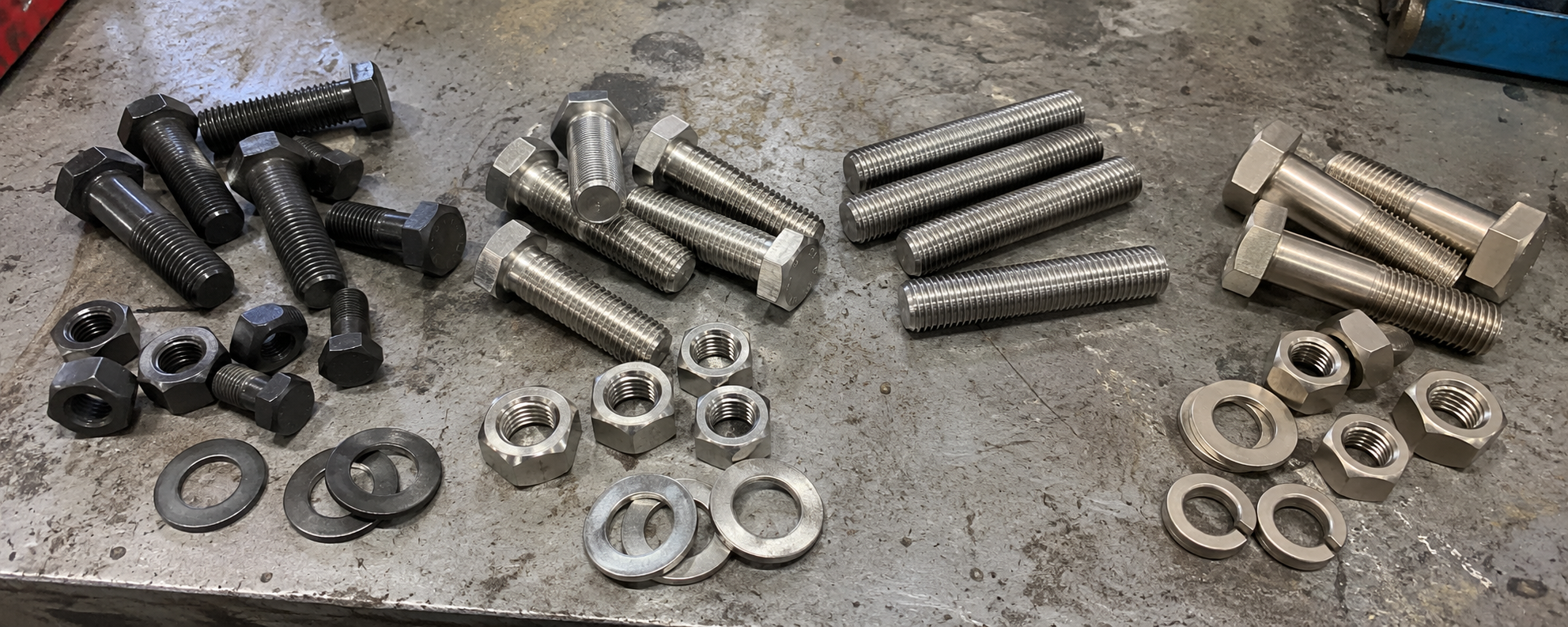
In my work with industrial buyers, I have learned that a fastener material cannot be chosen from a strength table alone. A bolt may have adequate tensile properties but still be unsuitable for seawater, acidic chemicals, high operating temperatures, or a specific client-approved material list. The sections below explain how I approach these questions from a procurement and supplier-evaluation perspective.
Are Alloy Steel High Strength Fasteners the Most Common Choice?
Buyers often need high strength fasteners quickly, especially when an equipment build, maintenance shutdown, or project delivery is approaching. The pressure can lead teams to select a familiar alloy steel option without checking corrosion, coating, heat treatment, or documentation needs. I recommend starting with the actual service conditions instead.
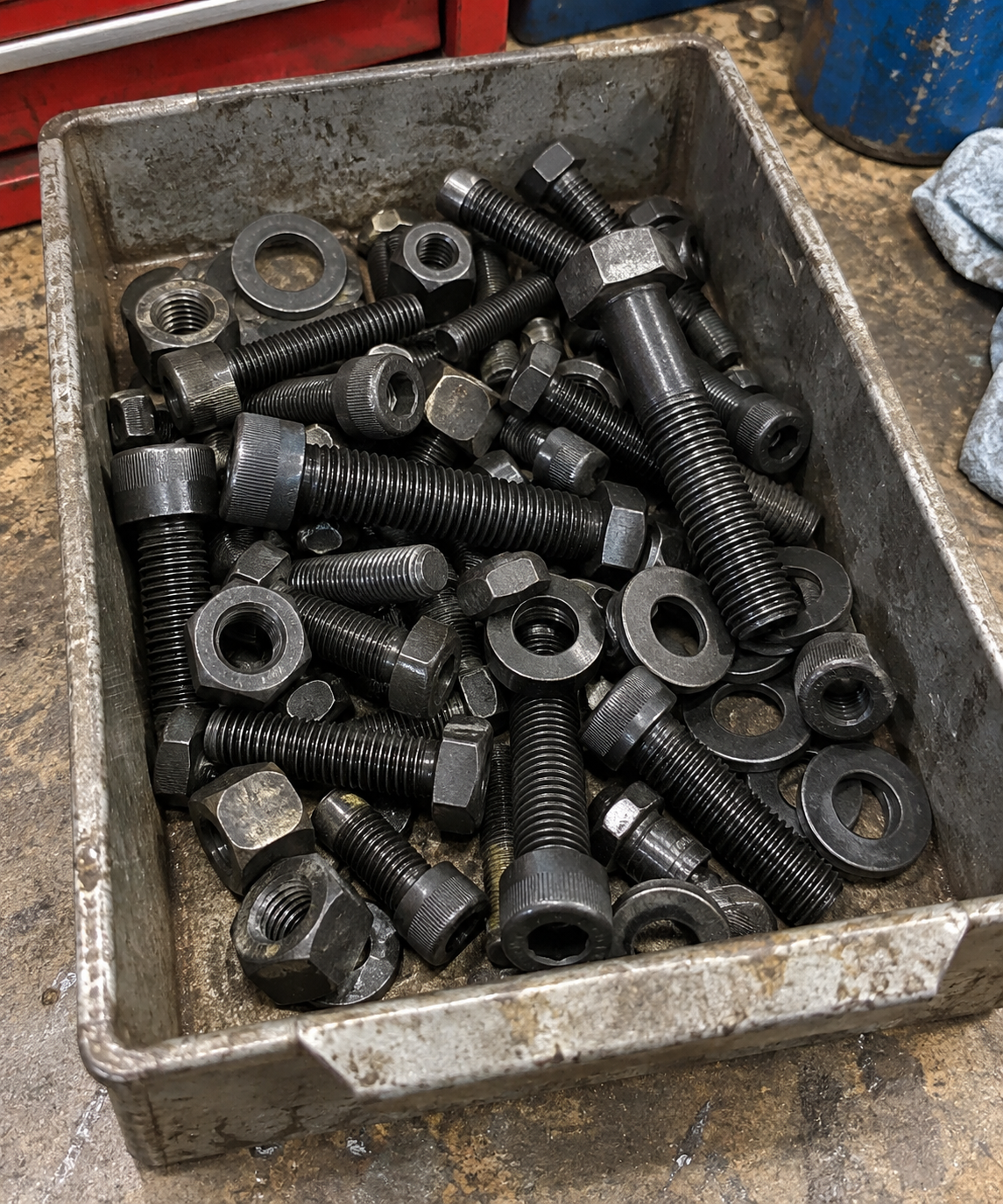
Alloy steel high strength fasteners are commonly used when a connection needs substantial mechanical strength and the operating environment is relatively controlled. They are widely considered for machinery, structural assemblies, industrial equipment, and general engineering applications. However, the required grade, property class, coating, heat-treatment condition, and standard must be verified because alloy steel may not provide sufficient corrosion resistance or high-temperature performance without additional protection or a different material choice.
Why alloy steel is widely evaluated
Alloy steel is often part of the first discussion because it can offer a practical balance between mechanical properties, availability, machining behavior, and cost. Depending on the applicable specification and heat treatment, alloy steel fasteners can be produced for demanding load-bearing connections.
For many industrial applications, a buyer may consider alloy steel when the fastener will be used in:
- Enclosed machinery or gear housings
- Indoor equipment with controlled humidity
- Heavy mechanical assemblies
- Construction and structural connections
- Industrial equipment with suitable surface protection
- Applications where a recognized fastener standard defines the required property class
However, I always encourage buyers to separate material selection from property-class selection. A familiar strength class does not tell the full story about chemical composition, corrosion performance, thread tolerances, heat treatment, or inspection scope.
Strength alone does not protect the connection
A high-strength alloy steel bolt can become a poor choice if the equipment operates outdoors, near saltwater, in a wet chemical process, or under repeated temperature cycling. Corrosion can reduce the effective cross-section of the fastener. It can also cause seizure, thread damage, loss of preload, or difficult disassembly during maintenance.1
The risk is not limited to visible red rust. Buyers should also consider:
- Galvanic effects: Dissimilar metals in a wet environment can accelerate corrosion in one component.
- Coating suitability: Zinc, zinc-aluminum, phosphate, PTFE, and other coatings have different limitations.
- Hydrogen-related concerns: Certain coating and processing routes may need careful control for high-strength parts.
- Thread lubrication: Friction changes can affect torque-tension results.
- Temperature exposure: Heat can affect coatings, lubrication, and the properties associated with a specific heat-treatment condition.
I have seen customers begin with a request for “high tensile bolts” and later clarify that the equipment will operate near marine spray or corrosive process media. That additional detail changes the procurement discussion. In those cases, a buyer may need to assess stainless steel, duplex grades, nickel alloys, or a corrosion-control system rather than simply increasing steel strength.
What to verify with an alloy steel fastener supplier
Before placing an order for alloy steel high strength fasteners, I suggest asking the supplier to confirm the documents and controls available for the specific order.
| Evaluation point | Why it matters |
|---|---|
| Applicable product standard | Defines dimensions, thread form, mechanical property requirements, and testing expectations |
| Material designation | Helps identify the intended base material, but does not replace full specification review |
| Heat-treatment condition | Has a major effect on final mechanical properties |
| Coating or surface finish | Influences corrosion resistance, friction, appearance, and service limits |
| Thread type and tolerance | Affects fit, assembly performance, and interchangeability |
| Inspection records | May include dimensional checks, thread gauges, mechanical testing, or material documentation |
| Traceability requirement | Can be important for projects, regulated sectors, and customer approval systems |
At CHENGGE, I would treat these items as part of an inquiry review rather than assume that one material suits every order. For application-specific decisions, the buyer should involve qualified engineering and quality personnel who can confirm the connection design and governing specification.
When Should Stainless Steel Be Used for High Strength Fasteners?
A buyer may move from alloy steel to stainless steel after discovering that moisture, chemicals, washdown conditions, or outdoor exposure will affect the assembly. The challenge is that “stainless steel” is not one performance level. A common stainless grade may resist some environments but may not meet the required strength or corrosion resistance.
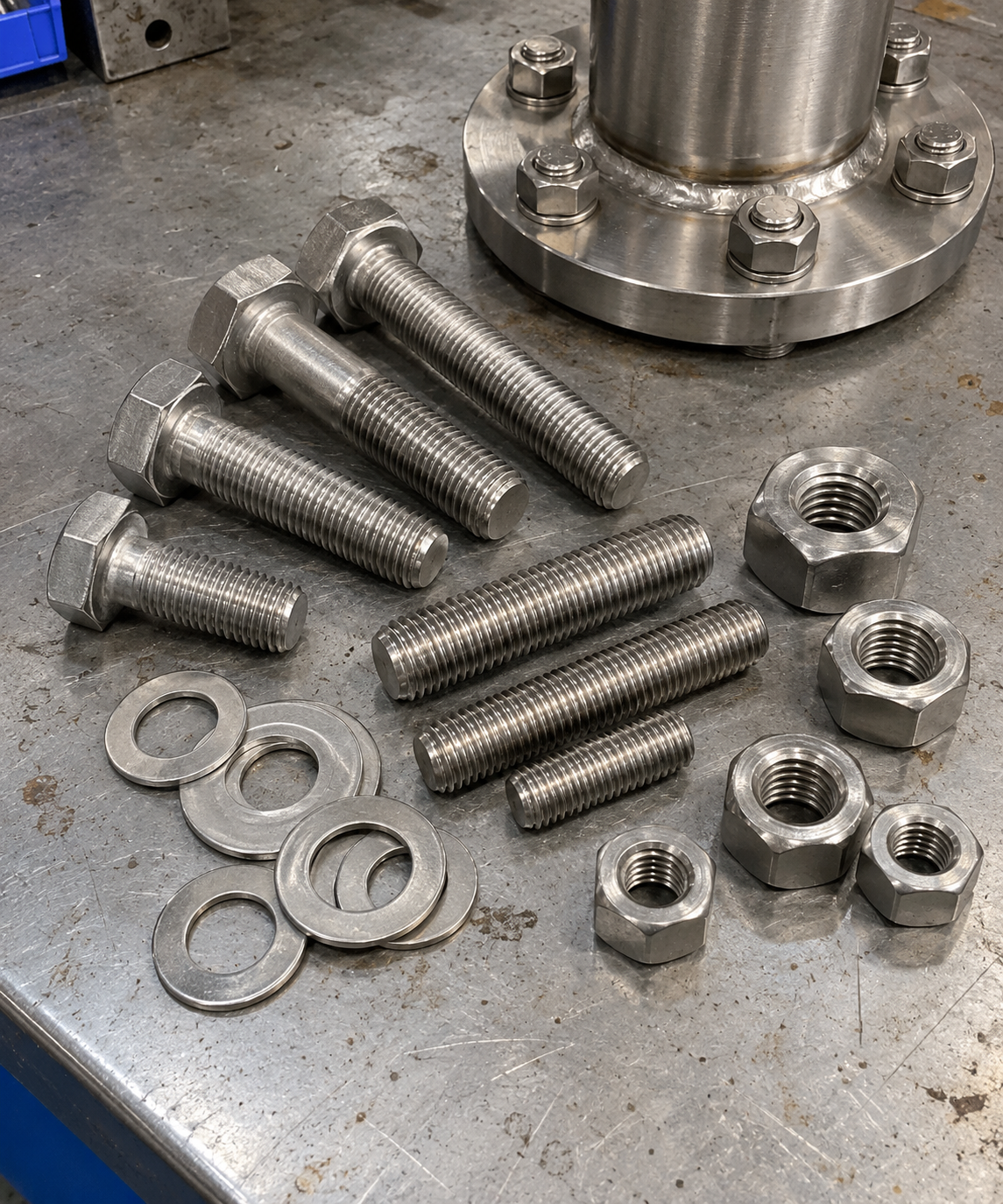
Stainless steel should be considered for high strength fasteners when the connection needs a balance of mechanical performance and corrosion resistance. Precipitation-hardening stainless steel, such as 17-4PH where specified, can be relevant for certain higher-strength applications.2 Duplex and super duplex stainless steels may be evaluated when corrosion resistance in chloride-containing or marine-related environments is also important.3 The exact material, condition, and product standard require technical verification.
Stainless steel is a family, not a single answer
One mistake I try to prevent in supplier communication is treating every stainless fastener as interchangeable. Stainless steel families have different alloy compositions, strength ranges, corrosion behavior, and manufacturing requirements.
For example, a buyer may be evaluating several broad categories:
| Stainless steel family | General procurement reason for evaluation | Important limitation to review |
|---|---|---|
| Austenitic stainless steel | General corrosion resistance and broad market familiarity | May not provide the strength level required for every application |
| Precipitation-hardening stainless steel | Higher strength potential with corrosion resistance | Properties depend heavily on specified condition and heat treatment |
| Duplex stainless steel | Strength and improved resistance in some chloride environments | Material, fabrication route, and service environment need review |
| Super duplex stainless steel | More demanding chloride or marine-related conditions | Higher cost and stricter material control may apply |
| High-temperature/stabilized austenitic stainless steel | Temperature-related service requirements | Suitability depends on actual temperature, load, and medium |
At CHENGGE, our specialty material scope includes 17-4PH stainless steel, duplex stainless steel such as 2205 or 2304 where applicable, and super duplex stainless steel such as 2507. However, I would not present these material names as automatic alternatives. A customer’s drawing, standard, approved manufacturer list, and end-user requirements remain central.
17-4PH and the importance of condition
17-4PH is often discussed in high strength fastener inquiries because it is a precipitation-hardening stainless steel. It can be relevant where buyers need a combination of corrosion resistance and higher mechanical properties than some common stainless options.
Still, the phrase “17-4PH bolt” is incomplete without further details. The specified heat-treatment condition can influence final properties. The fastener dimensions, thread form, production method, and inspection requirement can also affect what should be supplied and accepted.
I recommend that buyers clarify:
- Which material specification governs the raw material?
- Which product standard governs the finished fastener?
- What heat-treatment condition is required?
- Are mechanical tests required on representative samples, finished parts, or both?
- Does the project require material test certificates, hardness results, or additional inspection records?
- Does the service medium create a corrosion cracking or chloride-related concern?
A customer may request a high strength stainless fastener because they want “no rust.” However, no material label should replace a full review of the actual environment. Chlorides, chemical concentration, temperature, crevices, oxygen availability, and maintenance conditions can all change the corrosion risk.
Duplex and super duplex for demanding environments
Duplex and super duplex stainless steels may become relevant for marine equipment, offshore-related systems, chemical processing equipment, seawater-related service, and chloride-containing environments. These materials are often evaluated because buyers want more than strength. They may also require resistance to specific corrosion mechanisms.
That said, I would urge caution in every procurement comparison. A duplex or super duplex material can involve different sourcing conditions, manufacturing controls, lead times, and costs than standard stainless steel. Buyers should also confirm whether the project specification allows the material and whether the fastener geometry can be produced to the needed quality level.
A material upgrade is only useful when the upgrade addresses the actual failure risk. A more expensive material does not automatically improve every connection.
Are Nickel Alloys or Titanium Alloys Better for High Strength Fasteners?
Some industrial connections operate beyond the practical range of coated steel or conventional stainless steel. High temperatures, aggressive chemicals, sour process conditions, seawater exposure, and weight-sensitive equipment can shift the discussion toward nickel alloys or titanium alloys. Yet these materials should be selected carefully because their cost, availability, and approval requirements can be significant.
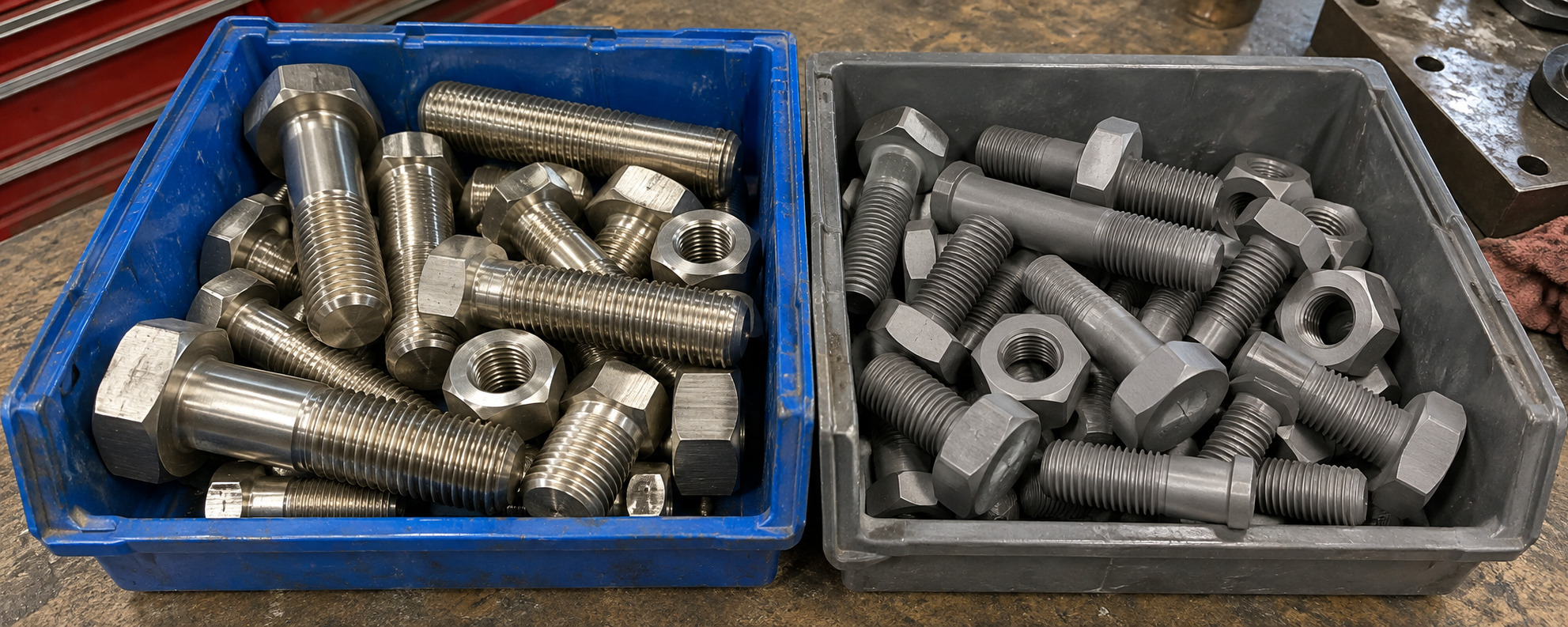
Nickel alloys and titanium alloys can be suitable for high strength fasteners when buyers must combine mechanical performance with demanding corrosion resistance, elevated-temperature capability, or low weight. Nickel alloys may be considered for high-temperature or aggressive chemical environments, while titanium alloys may be evaluated where corrosion resistance and weight reduction are important.4 Neither category is universally better; buyers should verify service conditions, standards, material source, finished-fastener testing, and project approval requirements before selection.
When nickel alloys enter the conversation
Nickel alloys are often considered when a fastener must perform in conditions that are too aggressive for a conventional steel or stainless steel selection. Inquiries may involve high-temperature equipment, chemical process systems, marine applications, oil and gas equipment, or specialized industrial assemblies.
Our material scope at CHENGGE includes nickel-alloy families such as Inconel, Incoloy, Monel, and Hastelloy. Representative names may include Alloy 600, 601, 625, 718, X-750, Alloy 825, Alloy 925, Monel 400, Monel K-500, and Hastelloy C-276. These names describe a broad supply context. They do not mean that one alloy can replace another or that every alloy is suitable for every fastener design.
A buyer should examine several questions before requesting a nickel alloy fastener:
- Is the main concern high temperature, corrosion, pressure, or a combination?
- What is the operating temperature range, including start-up and shutdown cycles?
- What chemical medium contacts the fastener?
- Is there a specified material designation from the end user?
- Does the application require a particular heat treatment or aging condition?
- Are there source restrictions or project-approved mills?
- Does the design require bolts, stud bolts, nuts, washers, or a complete matched assembly?
I have received inquiries where a customer initially focused on a high-temperature alloy name, but later explained that the end user had a specific raw-material origin preference. In that situation, price alone could not determine the supplier choice. Documentation, source acceptance, and traceability became equally important.
When titanium alloy fasteners may be evaluated
Titanium and titanium alloys may be considered when a project values a combination of corrosion resistance, low density, and mechanical performance. Buyers in marine, chemical, aerospace-related, and high-performance equipment supply chains may evaluate titanium fasteners for specific applications.
CHENGGE’s material background includes titanium grades such as TA2, TC4, TB3, ASTM Grade 2, and ASTM Grade 5, subject to the applicable specifications. However, Grade 2 and Grade 5 should not be treated as interchangeable simply because both are titanium designations. Their properties, intended uses, and specification requirements differ.
Titanium procurement requires careful review of:
- Material grade and governing standard
- Finished-fastener dimensions and thread geometry
- Galling or thread-seizure risk during assembly
- Surface treatment or lubrication requirements
- Mating materials in the joint
- Inspection and traceability documents
- Aerospace, medical, or project-specific approval requirements where applicable
Comparing material families in practical sourcing
The following table is not a design guide. It is a procurement-oriented comparison that helps buyers identify which questions to ask.
| Material family | Common reason buyers evaluate it | Typical concern to investigate |
|---|---|---|
| Carbon or alloy steel | Strength and commercial practicality | Corrosion protection, coating, temperature limits |
| 17-4PH stainless steel | Strength with stainless corrosion resistance | Heat-treatment condition, standard, corrosion medium |
| Duplex stainless steel | Strength plus resistance in some chloride environments | Exact grade, fabrication quality, environmental limits |
| Super duplex stainless steel | More demanding marine or chloride-related service | Cost, documentation, qualified production route |
| Nickel alloys | High temperature or aggressive chemical service | Exact alloy, source, heat treatment, lead time |
| Titanium alloys | Low weight and corrosion resistance | Grade selection, galling, approval and inspection requirements |
For high strength fasteners used in critical equipment, I recommend that procurement teams request a complete technical review before comparing quotations. An inexpensive quotation can become expensive if it lacks the documents, traceability, inspection scope, or material condition required by the project.
How Should Buyers Specify High Strength Fasteners?
Many sourcing delays happen because the inquiry contains only a material name and a size. The supplier then has to ask basic questions about thread, length, standard, heat treatment, quantity, and inspection documents. A more complete request helps buyers receive quotations that are easier to compare and less likely to create technical gaps later.
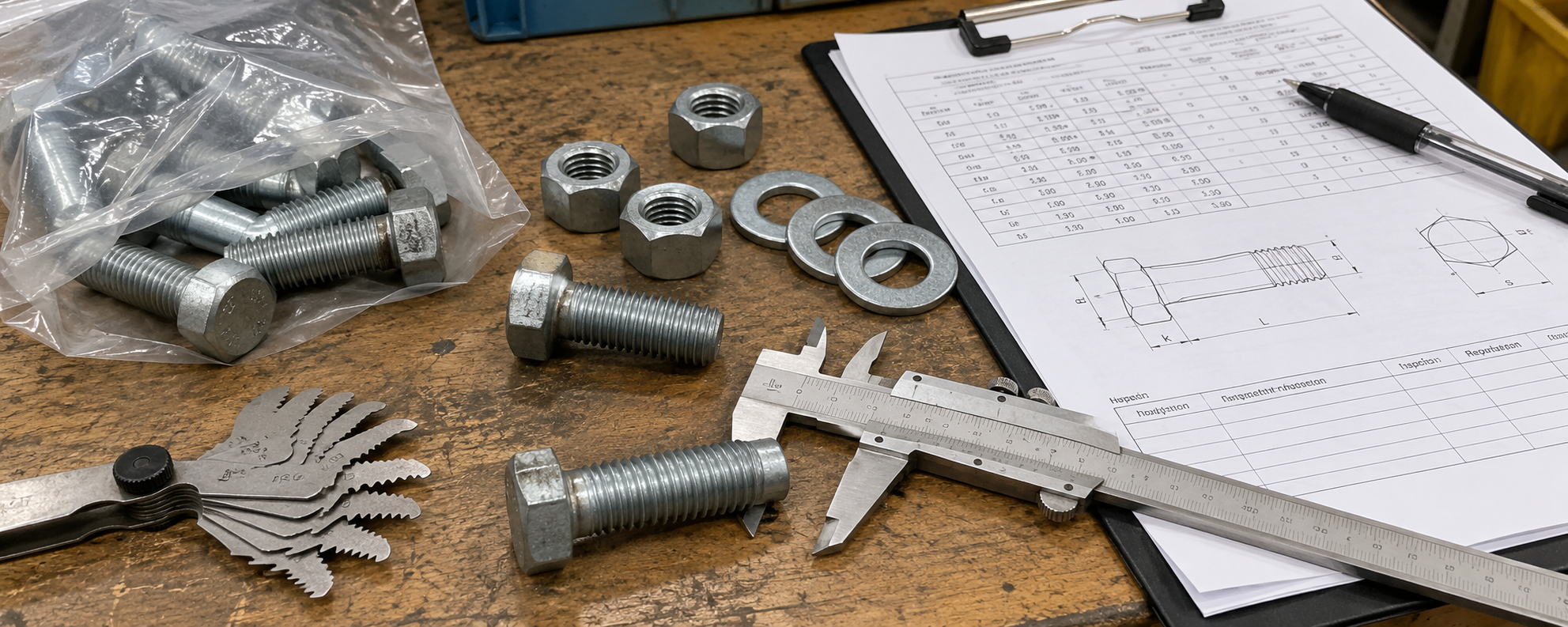
Buyers should specify high strength fasteners with complete mechanical, dimensional, environmental, and documentation requirements.5 A useful request includes the fastener type, material designation, applicable standard, dimensions, thread, heat-treatment condition, quantity, service environment, inspection needs, and required certificates. This information helps suppliers assess manufacturability, material availability, quality controls, MOQ, lead time, and commercial terms more accurately.
Build a complete inquiry package
In my experience, a buyer does not need to send a complex engineering report for every inquiry. However, the buyer should provide enough information for the supplier to understand what is being purchased.
A practical high strength fasteners inquiry should include:
-
Fastener type
State whether you need hex bolts, heavy hex bolts, socket head cap screws, stud bolts, threaded rods, nuts, washers, or custom machined components. -
Dimensions and thread details
Include diameter, length, thread pitch, thread length, head style, and required tolerances. A drawing is especially useful for non-standard products. -
Material requirement
State the required material designation and the governing material standard when known. Do not assume that similar grade names are equivalent. -
Mechanical and heat-treatment requirements
Include the specified property class, condition, hardness range, or test requirements only when these are defined by the applicable specification. -
Operating environment
Describe temperature, chemical exposure, humidity, saltwater, outdoor exposure, pressure, vibration, and other relevant factors. -
Required documents
Identify whether you need a material test certificate, heat number traceability, dimensional report, thread inspection record, mechanical test report, coating report, or third-party inspection. -
Quantity and delivery requirements
State the quantity per item, expected delivery date, destination, packaging requirement, and trade terms if available.
Evaluate quotations beyond the unit price
A strong supplier comparison should not only rank quotations by unit price. For specialty alloy fasteners, a buyer should also check whether every supplier quoted the same scope.
| Quotation review point | Question for the buyer |
|---|---|
| Material | Is the stated material exactly aligned with the inquiry and specification? |
| Product standard | Does the quote identify the relevant dimensional or product standard? |
| Manufacturing method | Is the method appropriate for the part geometry and order requirement? |
| Heat treatment | Has the supplier addressed the required final condition? |
| Inspection | Are promised reports clearly listed rather than assumed? |
| MOQ | Does the supplier’s minimum order quantity fit the project demand? |
| Lead time | Does the lead time include raw material procurement and inspection? |
| Commercial terms | Are freight, packaging, payment, and delivery terms clear? |
I recommend that engineering, quality, and procurement teams review critical fastener quotations together. Procurement may focus on commercial terms, while engineering verifies technical compliance and quality checks documentation. This shared review can reduce the risk of receiving a material that appears correct on a quotation but does not meet the actual project requirement.
At CHENGGE, I would encourage customers to send drawings, specifications, and inspection requirements early. Our business focuses on specialty alloy fasteners, standard products subject to agreed specifications, and custom fasteners or machined components made to confirmed technical requirements. Final feasibility depends on the material, dimensions, quantity, documents, and production conditions of each order.
Frequently Asked Questions
What is the most common material for high strength fasteners?
Alloy steel is commonly evaluated when mechanical strength is the main requirement and the environment is controlled. However, stainless steel, duplex stainless steel, nickel alloys, or titanium alloys may be more suitable when corrosion resistance, high temperature, chemical exposure, or low weight is also required.
Is stainless steel stronger than alloy steel for fasteners?
Stainless steel is not automatically stronger than alloy steel. Mechanical properties depend on the specific grade, product form, heat treatment, fastener dimensions, and applicable standard. Some stainless families are selected mainly for corrosion resistance, while some specialty stainless grades are evaluated for higher-strength requirements.
Can I replace alloy steel fasteners with 17-4PH stainless steel?
A replacement should not be assumed. Although 17-4PH may be relevant for some high-strength corrosion-resistant applications, the buyer must verify the governing standard, heat-treatment condition, corrosion environment, thread design, preload requirement, and customer or end-user approval before making a substitution.
When are nickel alloy high strength fasteners needed?
Nickel alloy high strength fasteners may be considered for demanding high-temperature, chemical-processing, marine, oil and gas, or corrosion-intensive applications. The specific alloy must be selected against the actual medium, temperature, mechanical requirement, project specification, documentation needs, and source-approval conditions.
What documents should I request for specialty alloy fasteners?
The required documents depend on the project. Buyers may request material test certificates, heat-number traceability, dimensional inspection reports, thread gauge records, mechanical test reports, heat-treatment records, coating reports, or third-party inspection documents. Buyers should state these requirements before quotation and order confirmation.
Conclusion
The material commonly used for high strength fasteners depends on far more than a single strength value. Alloy steel may be practical for controlled environments, while 17-4PH, duplex stainless steel, super duplex stainless steel, nickel alloys, and titanium alloys may be evaluated for more demanding corrosion, temperature, or weight-related requirements. I recommend confirming the complete specification, operating conditions, dimensions, heat-treatment state, and inspection documents before purchasing. If you are sourcing specialty alloy bolts, stud bolts, nuts, washers, or custom components, contact CHENGGE at [email protected] with your drawing or technical requirements for an initial procurement review.
"Threaded Fasteners: Part 1 - Failure Modes And Design ...", https://onepetro.org/NACECORR/proceedings/CORR11/CORR11/NACE-11164/119560. Corrosion can reduce the load-bearing cross-section of fasteners and lead to seizure, thread galling, and loss of preload, as documented in corrosion engineering references. Evidence role: mechanism; source type: research. Supports: Corrosion mechanisms that affect fastener performance. Scope note: The specific failure modes may vary with material and environment. ↩
"17-4 Precipitation-Hardening Stainless Steel: Soft-Tough Heat ...", https://pmc.ncbi.nlm.nih.gov/articles/PMC11642631/. 17-4PH is a precipitation-hardening stainless steel that can achieve high tensile strength, making it suitable for fasteners in demanding applications, as documented in material data sheets. Evidence role: general_support; source type: research. Supports: Use of 17-4PH stainless steel for high-strength fastener applications. Scope note: The actual strength depends on the heat-treatment condition and product form. ↩
"Seawater Corrosion Resistance of Duplex Stainless Steel and ...", https://pmc.ncbi.nlm.nih.gov/articles/PMC10707168/. Duplex and super duplex stainless steels are known for their resistance to chloride stress corrosion cracking and are often specified for marine and chemical processing fasteners, as per industry references. Evidence role: general_support; source type: research. Supports: Use of duplex and super duplex stainless steels in chloride and marine environments. Scope note: The exact grade and environmental limits must be verified for each application. ↩
"High-Temperature Ni-Based Superalloy Composition", https://technology.nasa.gov/patent/LEW-TOPS-152. Nickel alloy fasteners are commonly used in high-temperature and corrosive chemical processes, while titanium fasteners are chosen for weight-sensitive and corrosion-resistant applications, as per industry practice. Evidence role: general_support; source type: research. Supports: Typical applications of nickel and titanium alloy fasteners. Scope note: The suitability depends on the specific alloy and operating conditions. ↩
"Fastener Design Manual", https://ntrs.nasa.gov/api/citations/19900009424/downloads/19900009424.pdf. Industry guidelines recommend that fastener specifications include material, dimensions, standards, heat treatment, and documentation to ensure proper sourcing and quality, as outlined in procurement references. Evidence role: general_support; source type: research. Supports: Best practices for specifying high strength fasteners in procurement. Scope note: The exact requirements may vary by project and industry. ↩